
Golden Hammer
- the company history
Recently Added
or Updated...
Christchurch Chapel, Bridgwater
Recollections, Info,
Memories, Explanations
---------------------
[Latest discovery: a Garton & King Haldon Range has come to light in Chittlehampton! - see below]
Well before the arrival of the Aga, the Rayburn or the Esse Cooker Garton & King, and their predecessors Garton & Jarvis, not only retailed other manufacturers Stoves – the Eagle Range & Grate Company being one and the Herald range of Stoves being another example – but also manufactured and marketed their own.
The 1851 Great Exhibition boosted the fame and reputation of Garton & Jarvis as it was then, not least by the patronage afforded by the H.R.H. The Prince Consort of the Cottage Stove. (See). The Prince Consort was deeply involved in improving conditions for the working man and his Model Cottage incorporated many of his ideas. See Chapter 5 of Golden Hammer, and the Great Exhibition page for more details and pictures.
In 1855 Garton & Jarvis displayed at another great trade exhibition The Paris Universal Exhibition. Logistically this must have been quite an undertaking as no doubt the items for display had to be conveyed by horse and cart and rail and ship to France and then by rail and horse and cart to the Exhibition site. No forklifts, no Channel Tunnel and certainly no Road Hauliers.
From 1850 sales not only of the Cottage Stove but the Medium and Larger Stoves increased (Haldon, Exminster, Exonian and Rectory are some examples) and it is most fortunate that records exist showing not only the Private Purchases made from 1850 up to about 1870 but for certain models up to about 1900. The documentation is enthralling reading as it gives the name of the purchaser, the type and size of the stove and the amount paid and the date. For the larger stoves it is a heady mix of Nobility, Clergymen and well heeled businessmen (see Stove Customers page).
Amongst the list of purchasers one can tell that Agents for the Company are working hard to export the products and Sydney, Australia and Wellington, New Zealand appear as some of the more distant destinations. Gunn & Ross of Dunedin in south island were one of the stockists of Garton & Jarvis’s (and later Garton & King’s) Stoves.
The 1900 Catalogue mentions many stoves with familiar Devon names – The Exonian, The Haldon and the Exminster Range. Some of the drawings are works of art and a few examples are to be seen here including some for Steam Cooking Apparatus. I have included also some photographs of items still around today!
Steam Cooking Apparatus
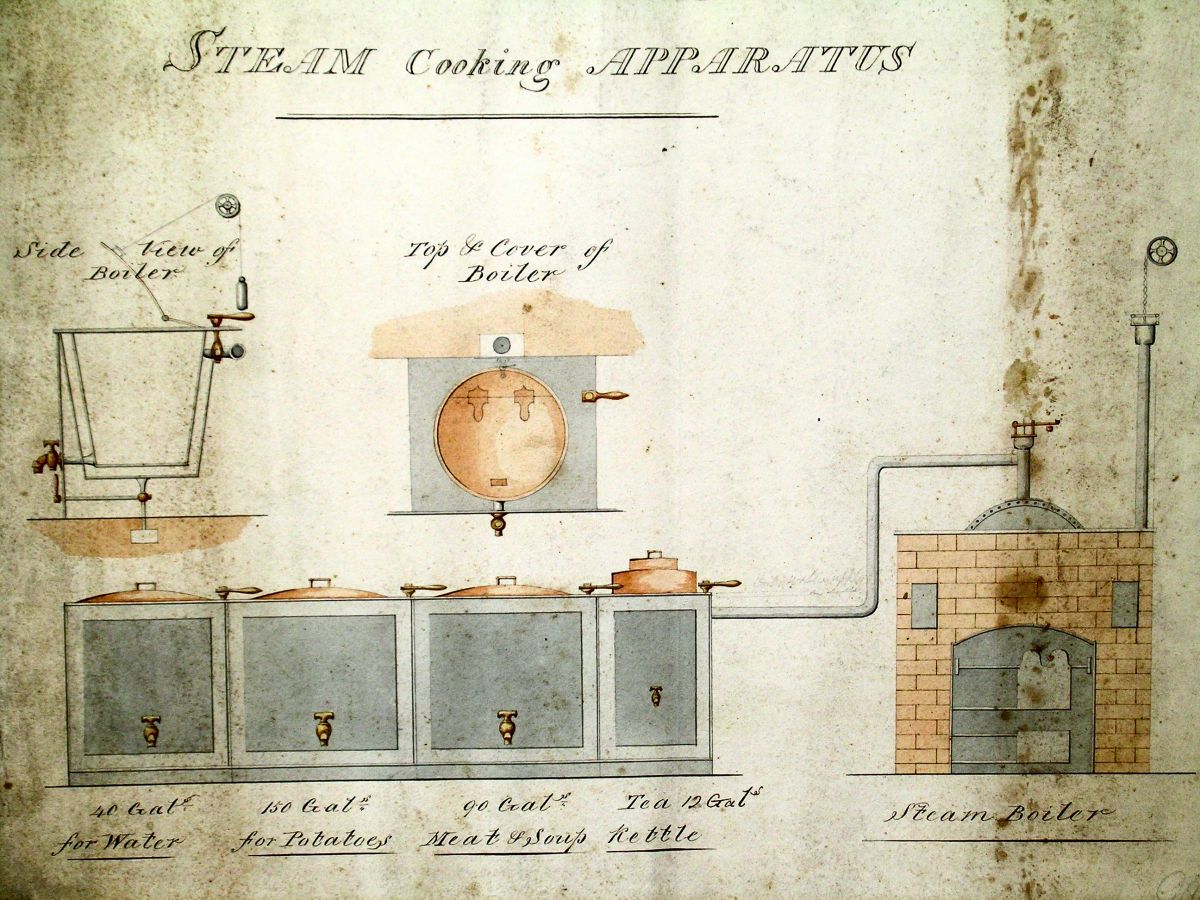 There is no indication as to where this Apparatus might have ended up but we’re talking large scale quantities here. The top left diagram shows a cross section through a compartment; the lid apparently can be opened very easily as there is a weight and pulley mechanism. The diagram to the right shows a view from the top. The compartments from the left are marked as follows:
40 Gall: Water – 150 Gall: Potatoes – 90 Gall: Meat & Soups – Tea 12 Gall: Kettle.
One can only assume this was intended for a large institution like a Hospital or a Hotel. Of the size of, say, the Rougemont. I mention this Hotel as there is firm evidence that Garton & King supplied all the kitchen equipment for the Rougemont Kitchens as well as the Laundry and Steam Drying Room.
Display
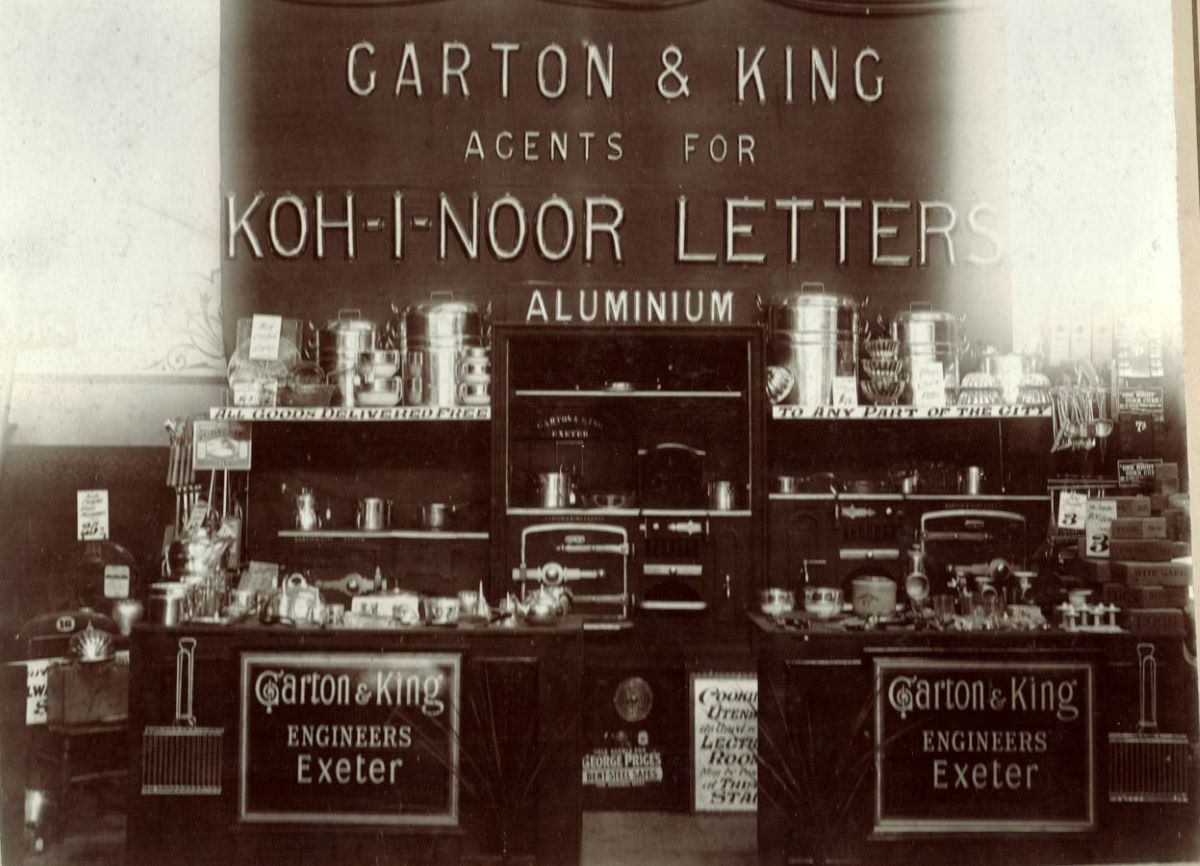 The company set up displays at many events in the Westcountry and my first thought was that this was a display from an Agricultural Show, however, there are only three cities in Devon and Cornwall, Plymouth, Truro and Exeter so the sign that says “Free delivery within the City” must refer to Exeter and therefore I believe this display of Ranges and Cooking Equipment is at a stand at a Show in or near to Exeter. Close examination shows a comprehensive display of Pots, Pans, Utensils, Measuring Jugs, Funnels, Mincers, Cake Tins, Toasting Racks and Jelly / Blancmange Moulds. There is also an intrigueing advert for a “One Night Corn Cure”
The Railway Cottage Stove
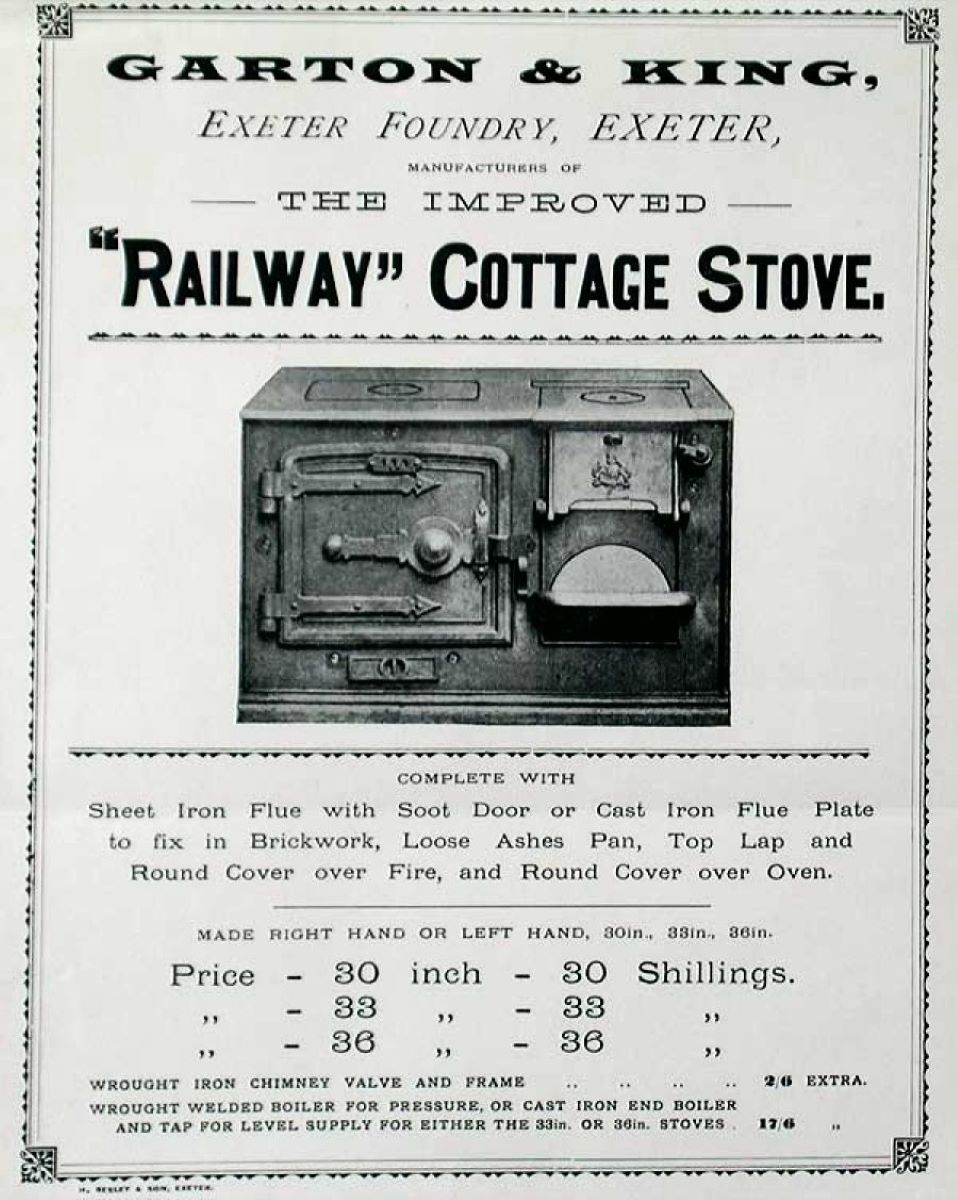 The Poster is printed by Besley & Son Exeter. The Exeter Foundry means Waterbeer Street Foundry. The stove was available at 30” 33” & 36” widths and was available Right or Left handed. By 1900 this stove had increased to £2.2s.6d, £2.7s.6d and to £2.12s.6d for the 3ft wide model.
When winter makes its mark on the countryside and the temperatures fall, spare a thought for the working family in the middle to late 19th and early 20th Centuries.
We do so love to immerse ourselves in self pity and gripe about fuel costs and how to make the housekeeping budget spread a little further but spare some thought for our predecessors in those Victorian and early Edwardian times.
Shown here is what those working families had to cook on and heat water on and from. Whereas Town Gas might have been available to urban residents - electricity was in its infancy and no-one had ever heard of Microwaves, Combi Boilers, Ceramic hobs or even AGAs and Multifuel Cookers - in the smaller towns and villages and out in the Countryside this is the sort of stove on which many families used in the kitchen and on which they were dependant.
With the increased use of Gas Cookers as more and more Gasworks were commissioned and the spread of the Electric Grid System and the development and improvement of Electric Heating and Cooking Appliances it is hard to imagine just what our forebears had to depend on on a daily basis.
The earlier Cottage Stove by Garton & Jarvis rose to fame when it was chosen by Prince Albert for his Model Cottage exhibited at the 1851 Great Exhibition. More details and pictures are on the Great Exhibition page.
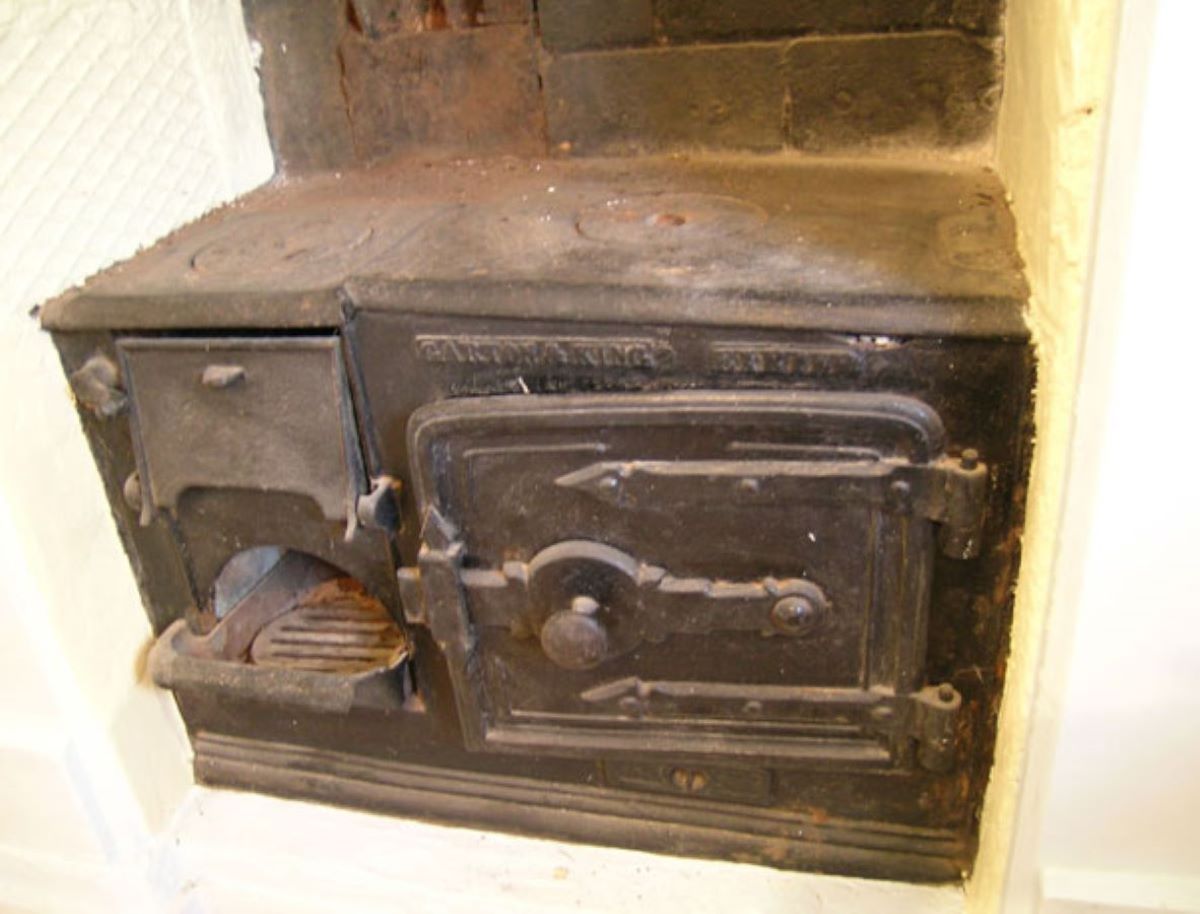
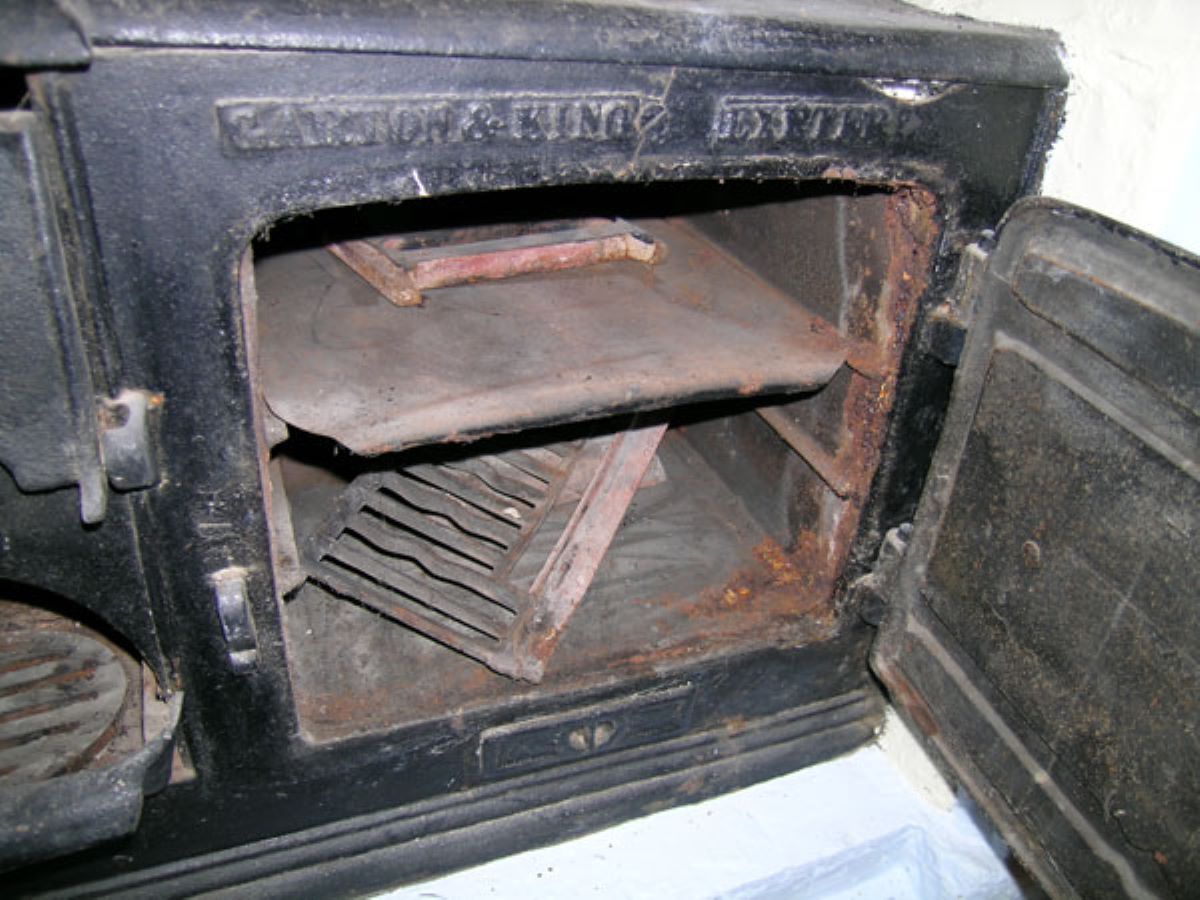 What is even harder to imagine is to find a home that still retains the stove used by the smaller household of that era, albeit not in use, and to go to an extreme to discover the Holy Grail - a GARTON & KING Cottage Stove still in its original location!
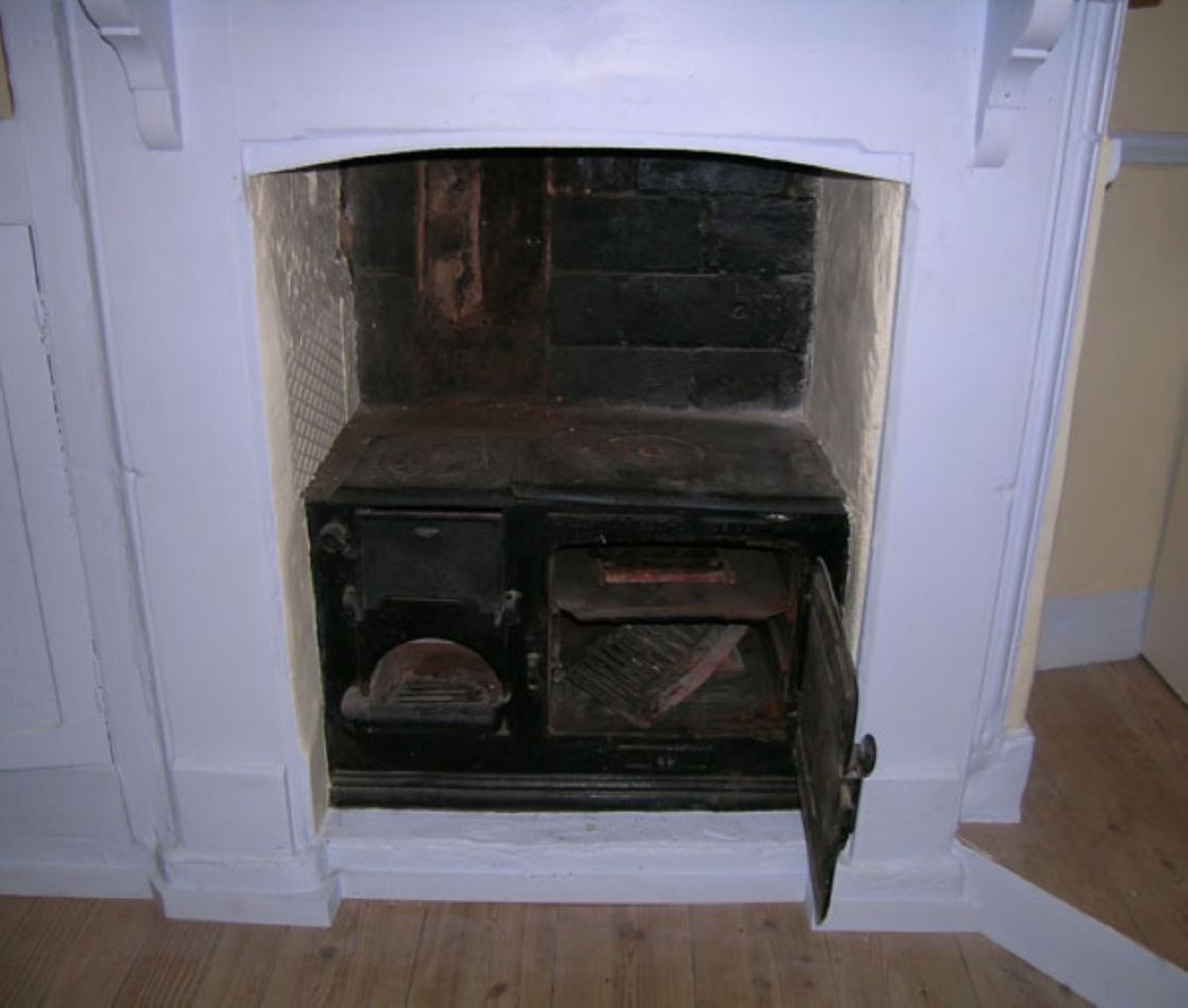
In order to save the owner of this stove from unwelcome visits from enterprising Cooker Salesmen and offers of Hot Meals on Wheels deliveries, we can assure you that this owner does have satisfactory up to date Cooking and Hot Water Appliances. I can, however, inform you that this stove is in a property in the Sidford area of Devon, and the owner came across this website when she attempted to discover more about the Stove and its manufacturer.
A cheering tale to show that these stoves still survive, some of them may be approaching 150 years of age but this is the first one I have heard about and seen in ten years of searching. The more observant of you may have already noticed that the image in the advert above and the actual stove are mirror images - close inspection of the advert states, however, that both Right Hand and Left Hand versions were available.
If YOU know of a Garton & King, or Garton & Jarvis Stove, Radiator or Boiler of the Victorian or Edwardian era OR an AGA still in use manufactured BEFORE 1940 please tell me about it, my contact details are on the About me page.
Milk Scalding Stove
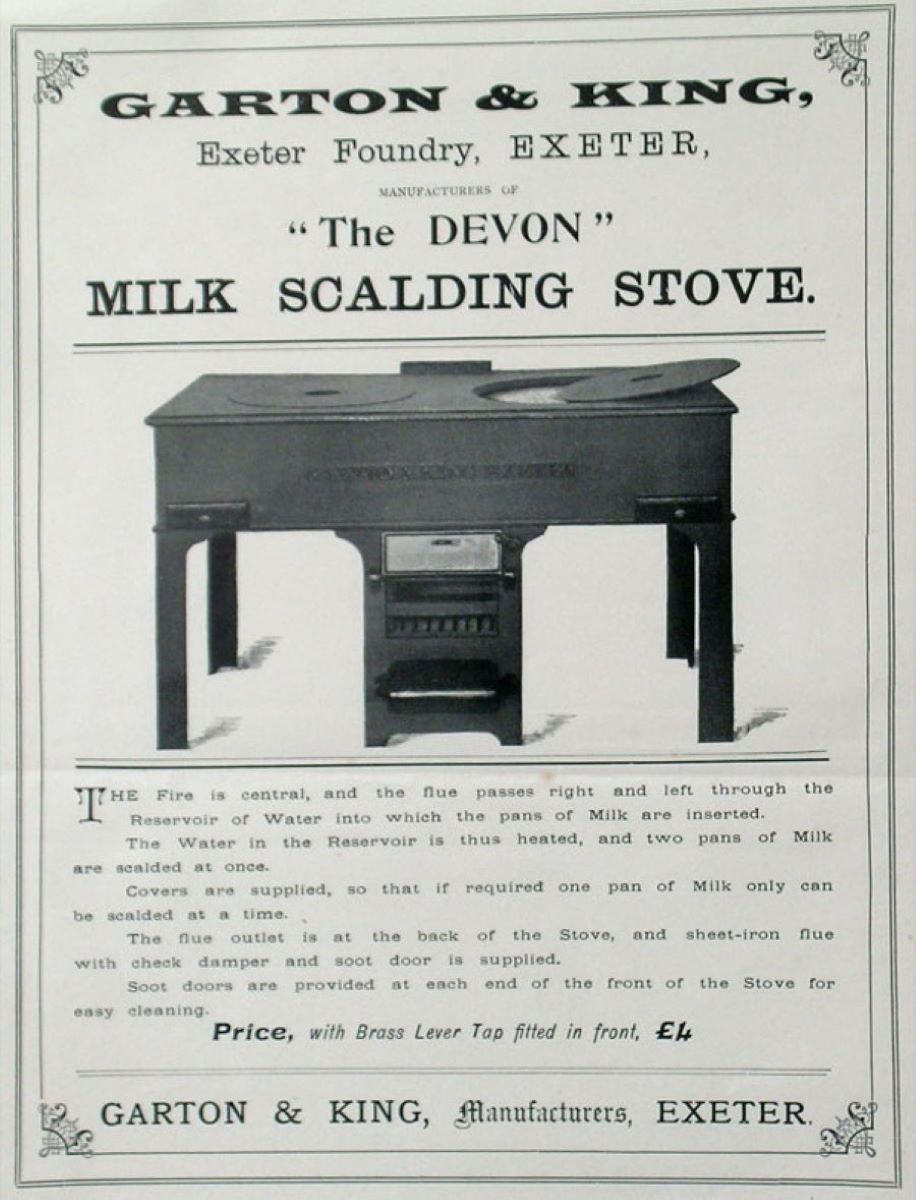 What is a Milk Scalding Stove you might well ask! We take pasteurised milk for granted nowadays – pasteurisation does exactly what Scalding did in Victorian times – kills all the bacteria and enzymes once 180 degrees Fahrenheit is reached. In this stove the fire is central and the flue passes right and left through the reservoir of water into which the pans of milk are inserted. The covers are supplied so that, if required, one pan of milk only can be scalded at a time. £4.16s. of your hard earned money in 1900 – but you do get a solid brass tap!
Holcombe Court
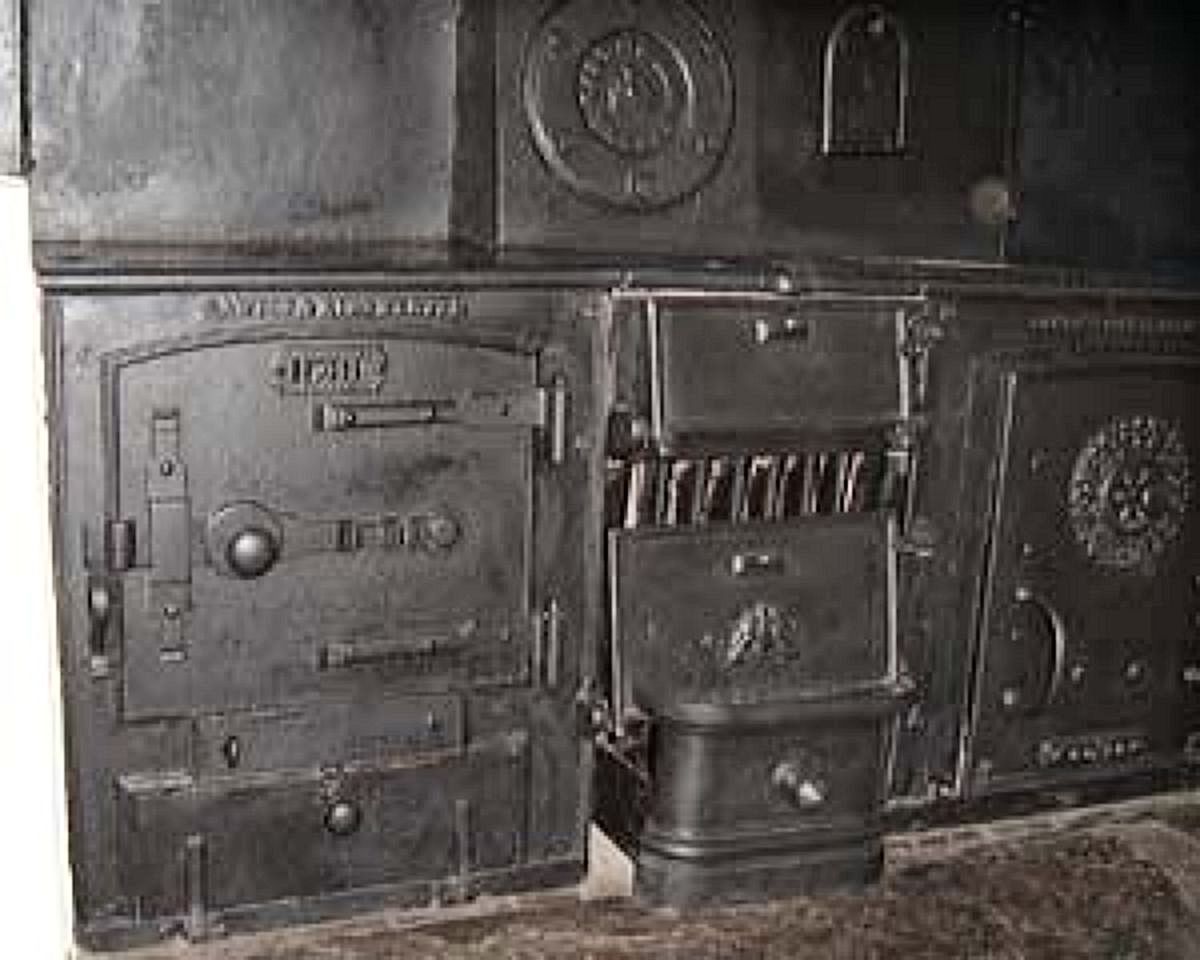 Holcombe Court appears to be a treasure trove of things Garton & King!. My thanks to Mr Wiggins for permitting me to visit and photograph this Gem. I would imagine the chances of finding another Stove of this size still in its original location as extremely unlikely. The Rev William Rayer purchased Holcombe Court from the Bluett family in 1858, on his death the estate passed to William Carew Rayer (1820 – 1892). W. C. Rayer purchased the Universal Stove on July 6th 1866 and paid the princely sum of £13 for the 5 foot wide model. Holcombe Court appears in other Product Sections on this Website.
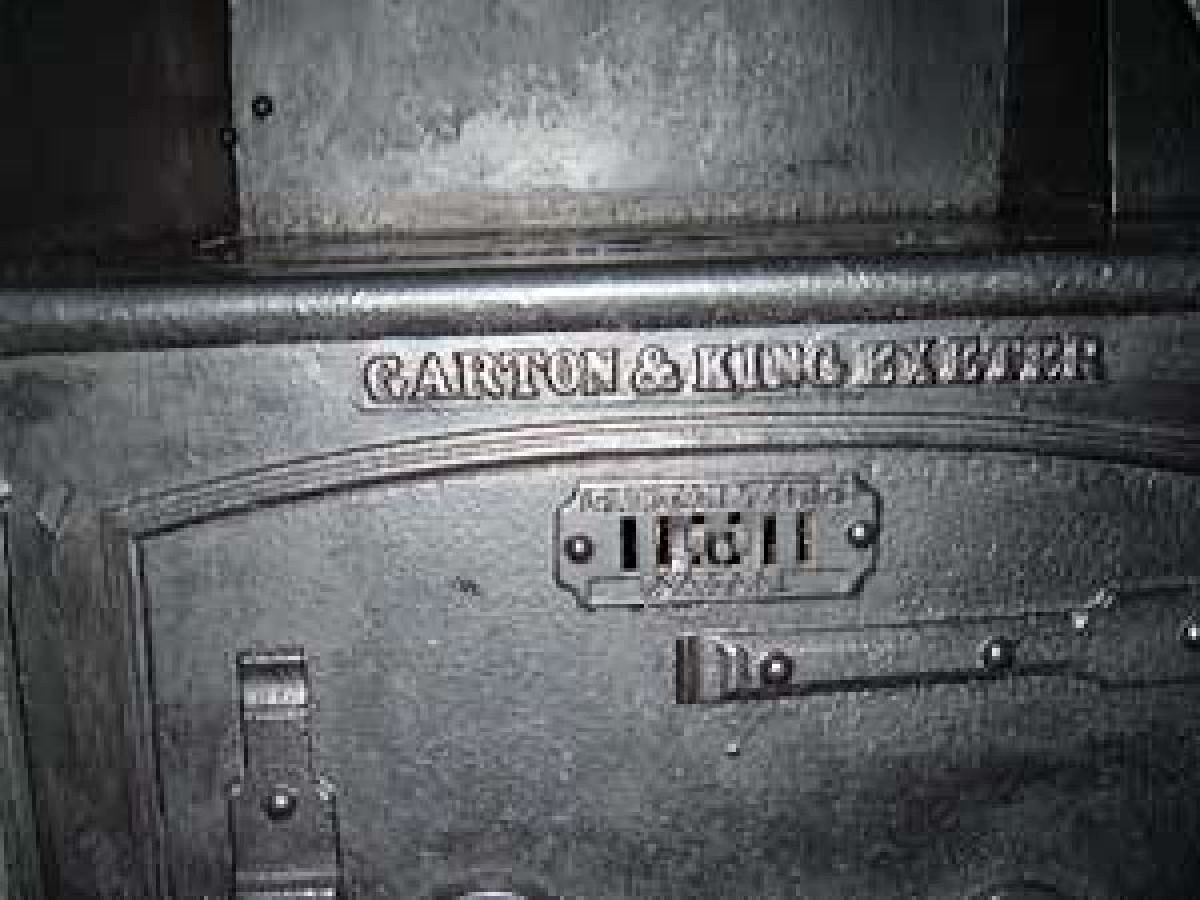
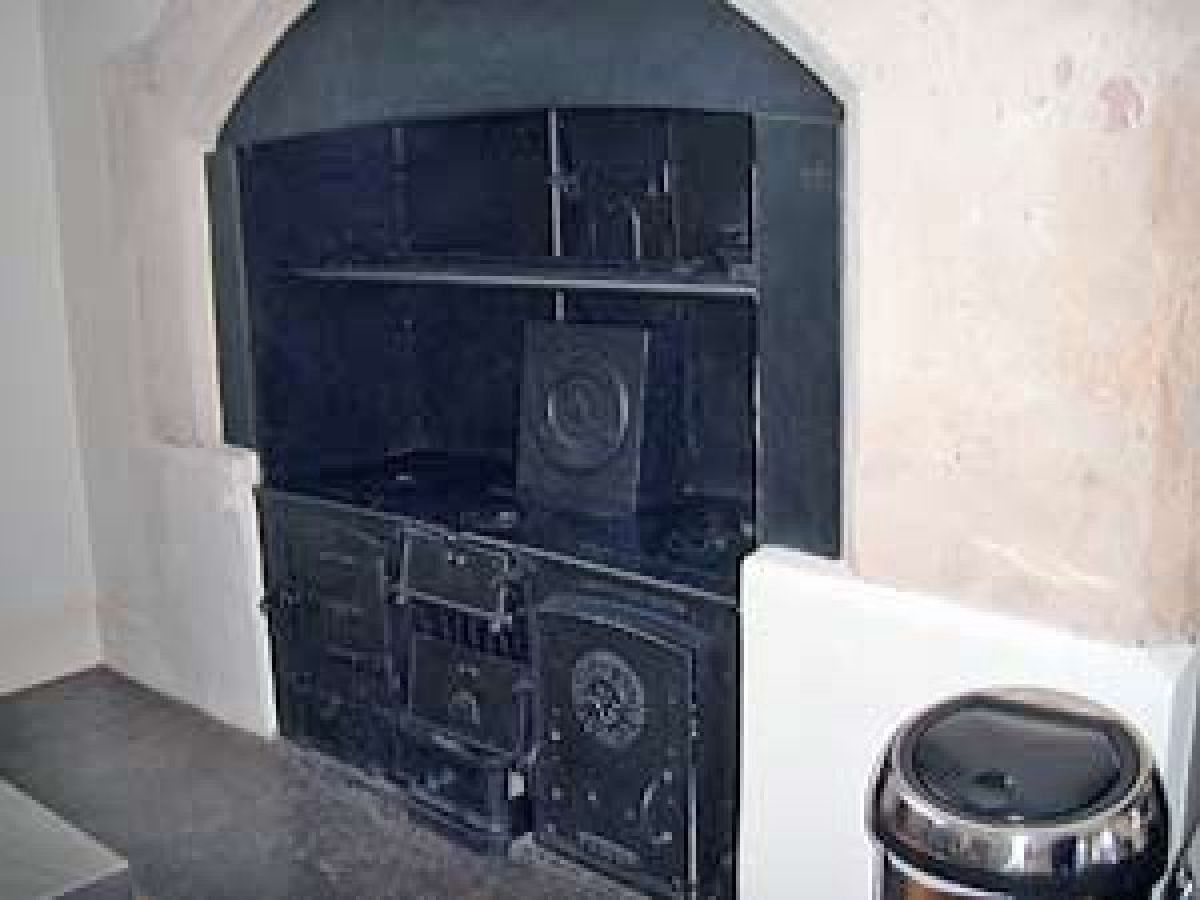 The Exonian Stove at Holcombe Court, and a close-up of the front bearing the company name.
Steam Cooking Apparatus
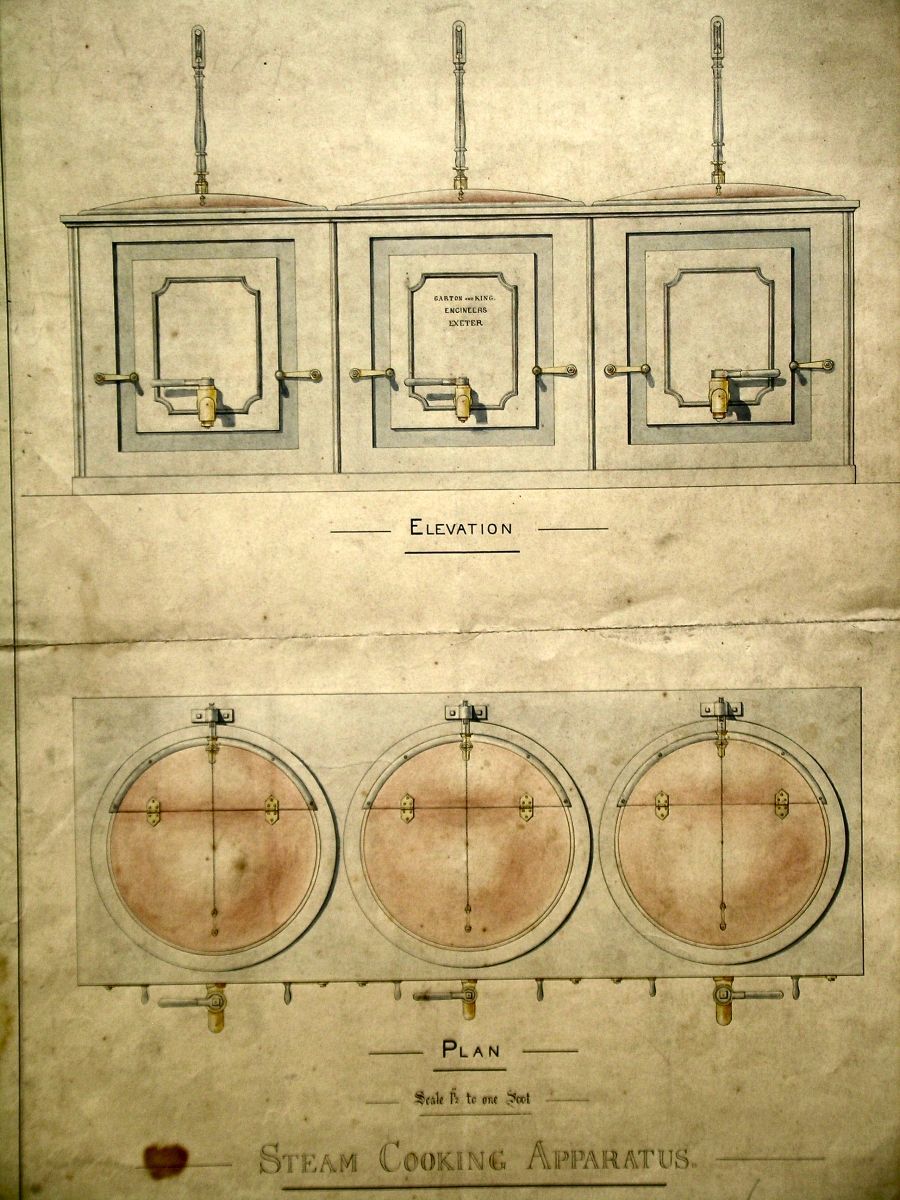 This type of apparatus found much favour in Hospitals and Large hotels. This drawing gives no indication of the ultimate customer but should be appreciated for its attention to detail and the colouring, presumably achieved with brush and watercolours.
Stove and Bread Oven
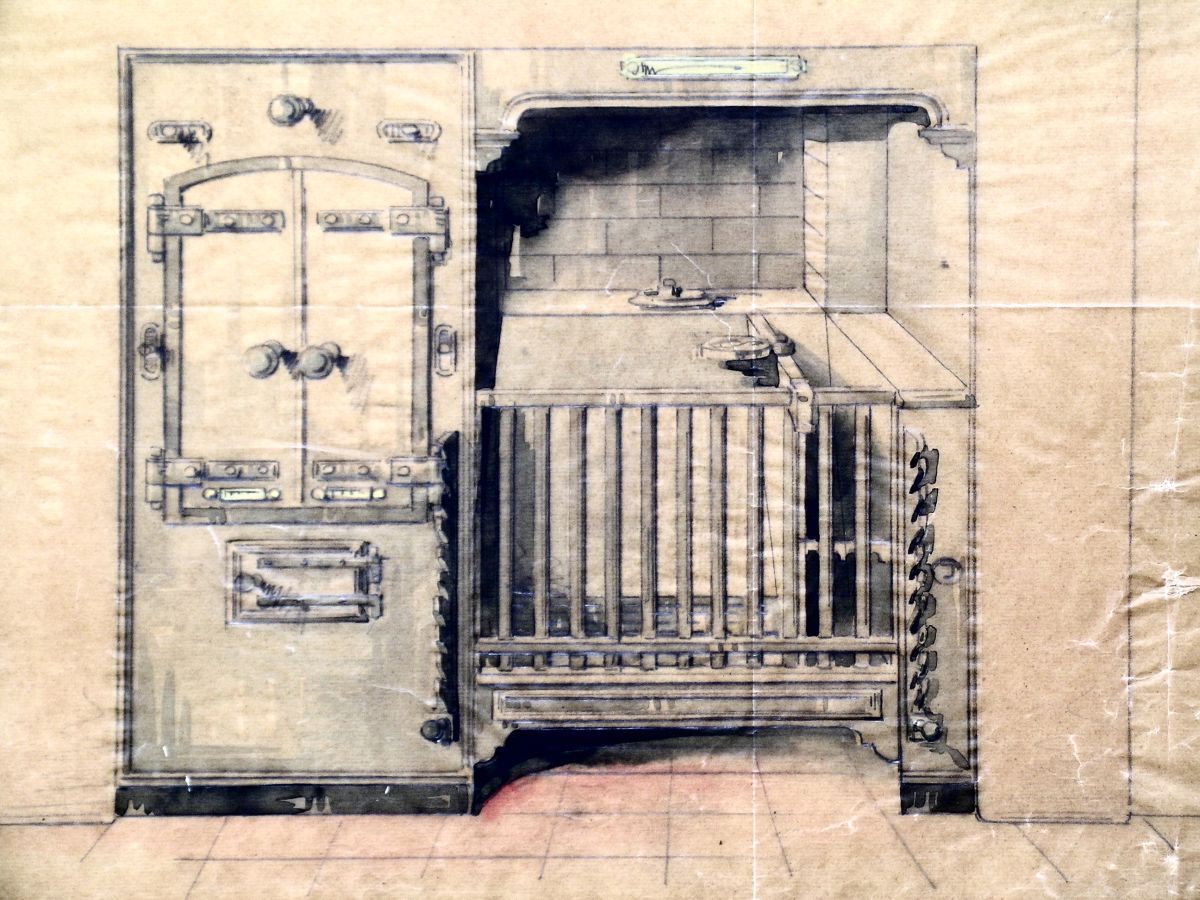 This solidly made apparatus – one can hardly call it an appliance – catered for the industrious and skilful Housewife / Cook. How successful was the combination of the two I do not know. In many instances the bread oven was separate from the main cooker.
Haldon Range
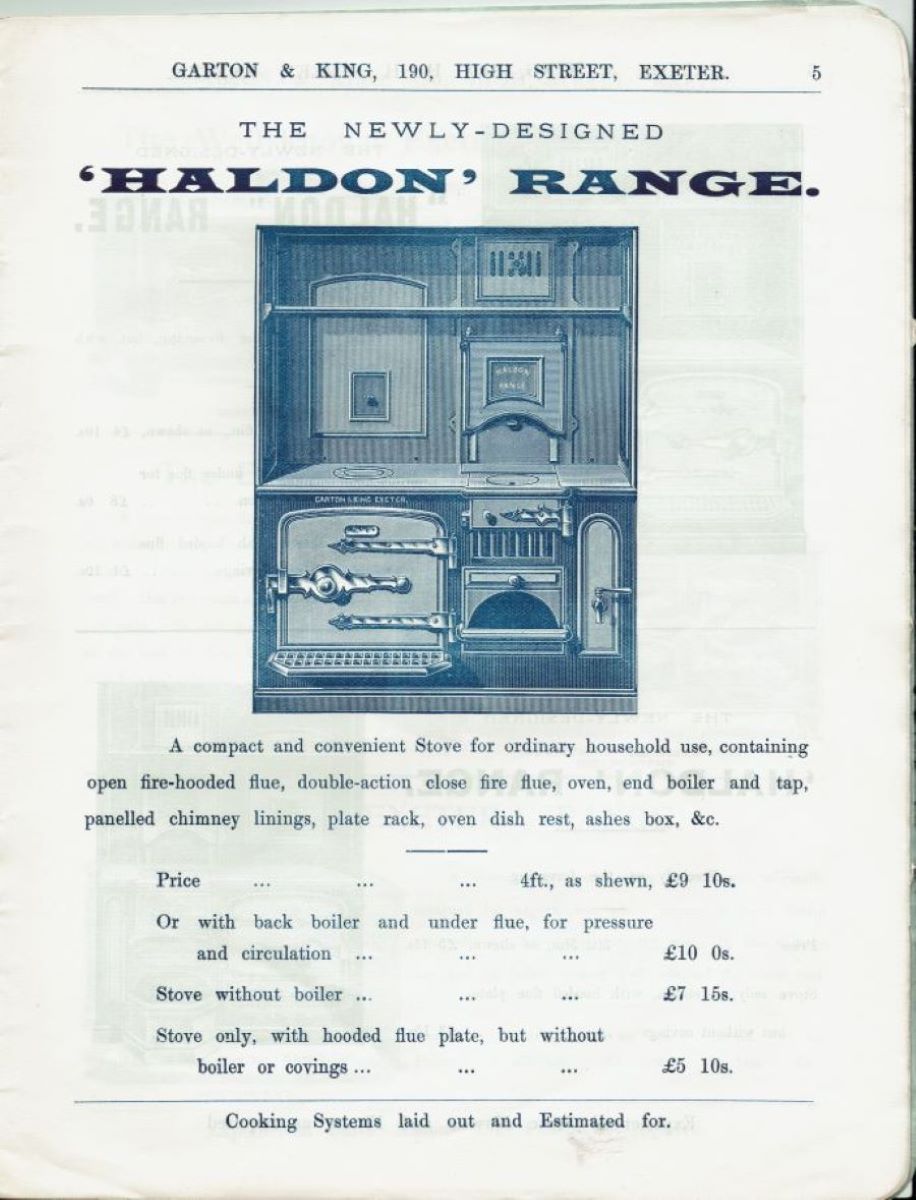 The ‘Haldon Range’ appears in the 1900 Catalogue but was probably a stock item available up to at least two decades prior to that date, with modification and tweakings. It was available in a reverse (mirror image) configuration with, as described, optional extras.
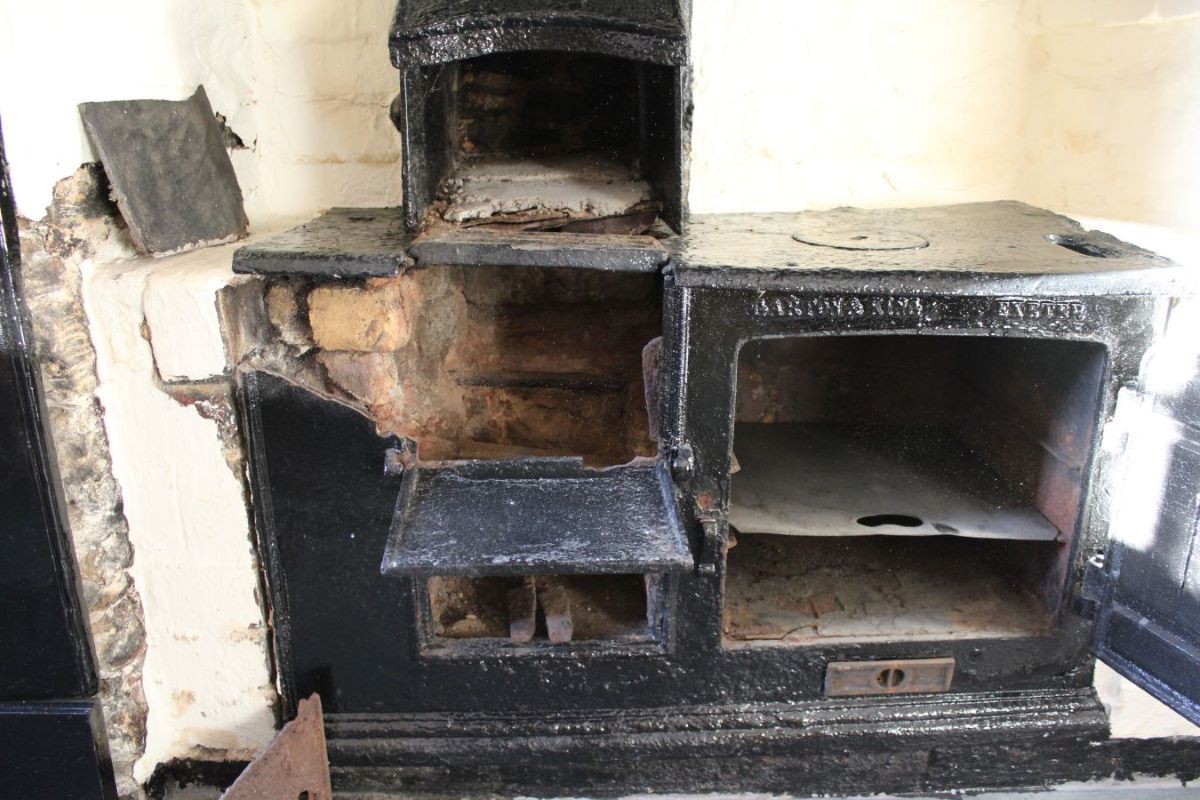
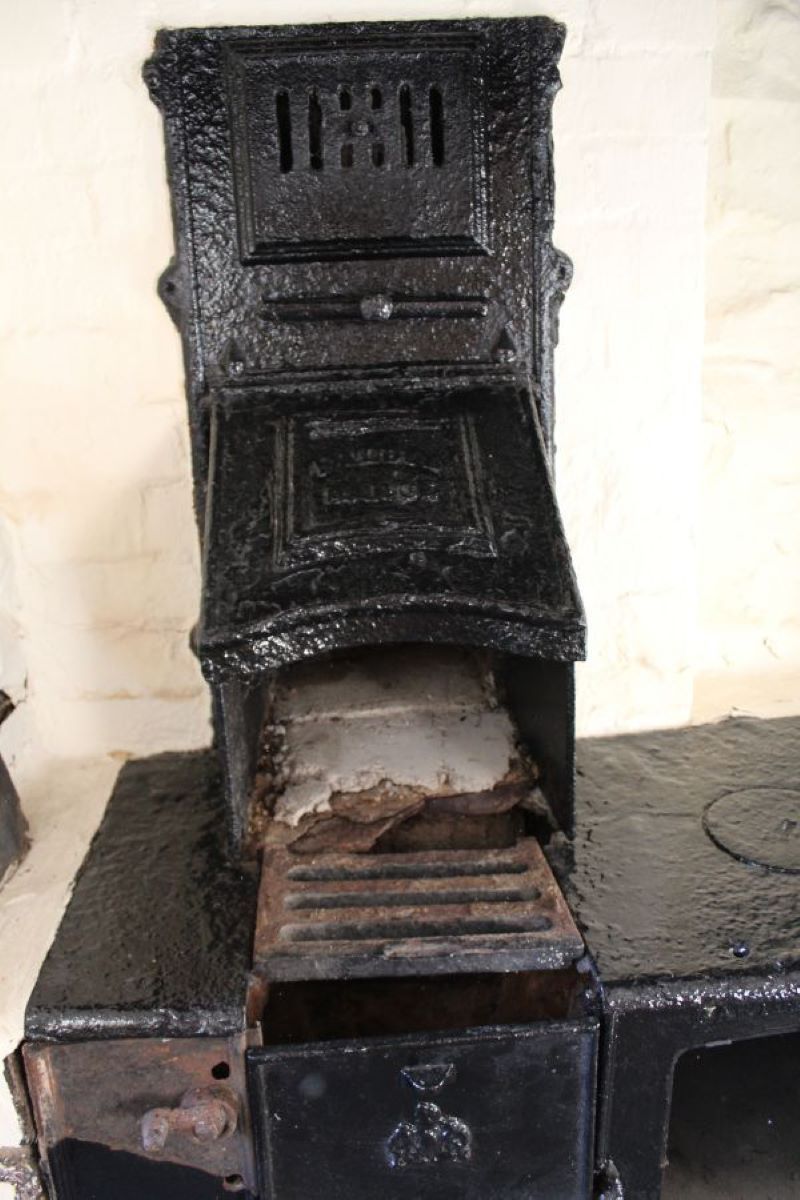
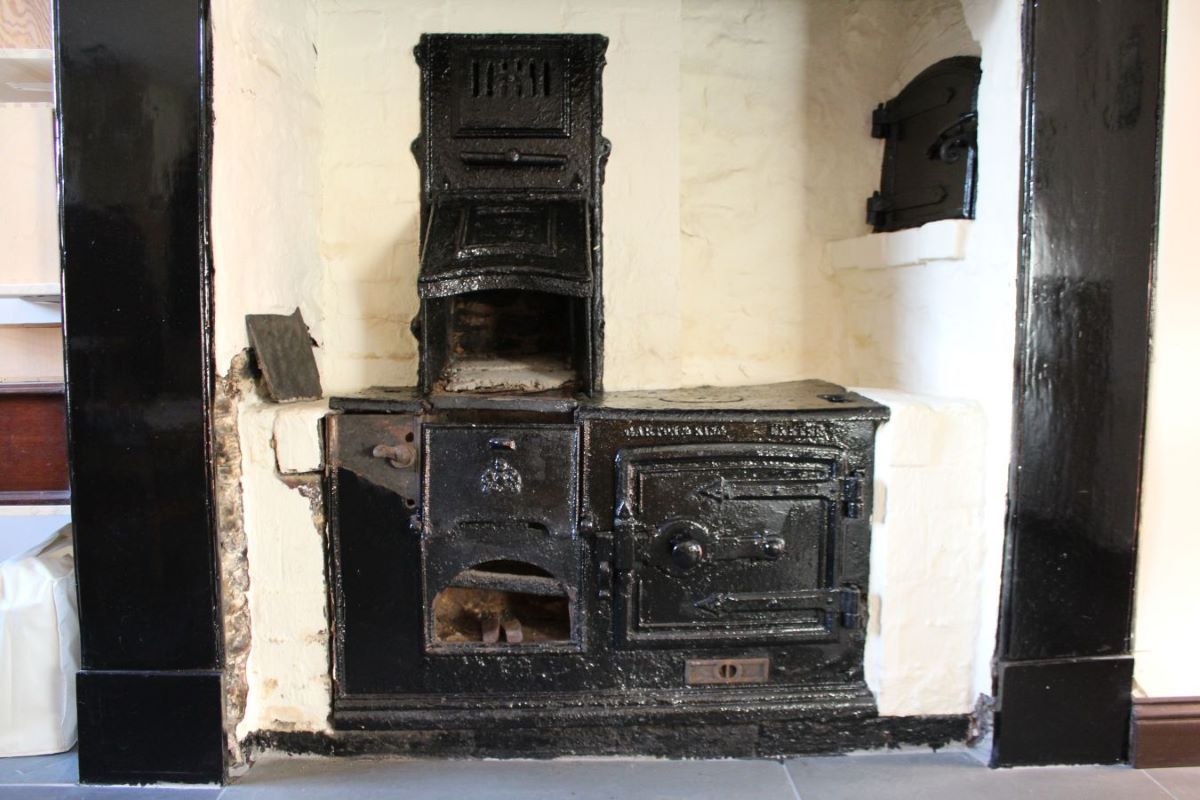
Up until December 2020 no example of this Range has been found – but one has recently come to light. A new resident to a property in a row of terraced houses in Chittlehampton, North Devon has forwarded to me pictures of her Haldon Range and it would appear that the owner has every intention of having it restored and in all probability with Osborne Restoration, a firm skilled in the restoration of Victorian Ranges located at Avona Stove Works between Bristol & Bath – www.osbornerestoration.co.uk
Should the restoration go ahead I will upload images and I shall be keen to see the Haldon Range put back to near its original condition. In the meantime I have added some images of how it currently looks.
Barnstaple Agricultural Exhibition
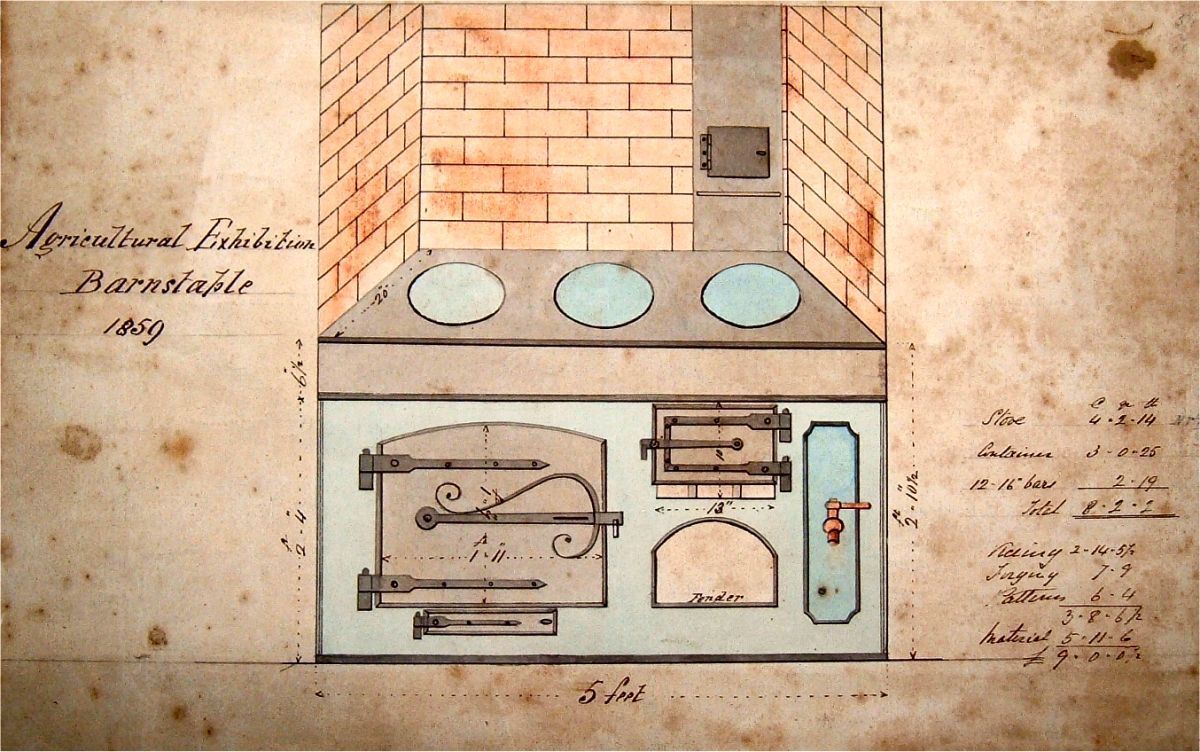 In 1859 this range was exhibited at the Barnstaple Exhibition. And total price came to £9 and a halfpenny. Whilst it may seem somewhat mean to charge a halfpenny one should remember that the spending power of that amount was quite considerable and of course the farthing was still in existence until after WW2.
The 1909 Roasting Range
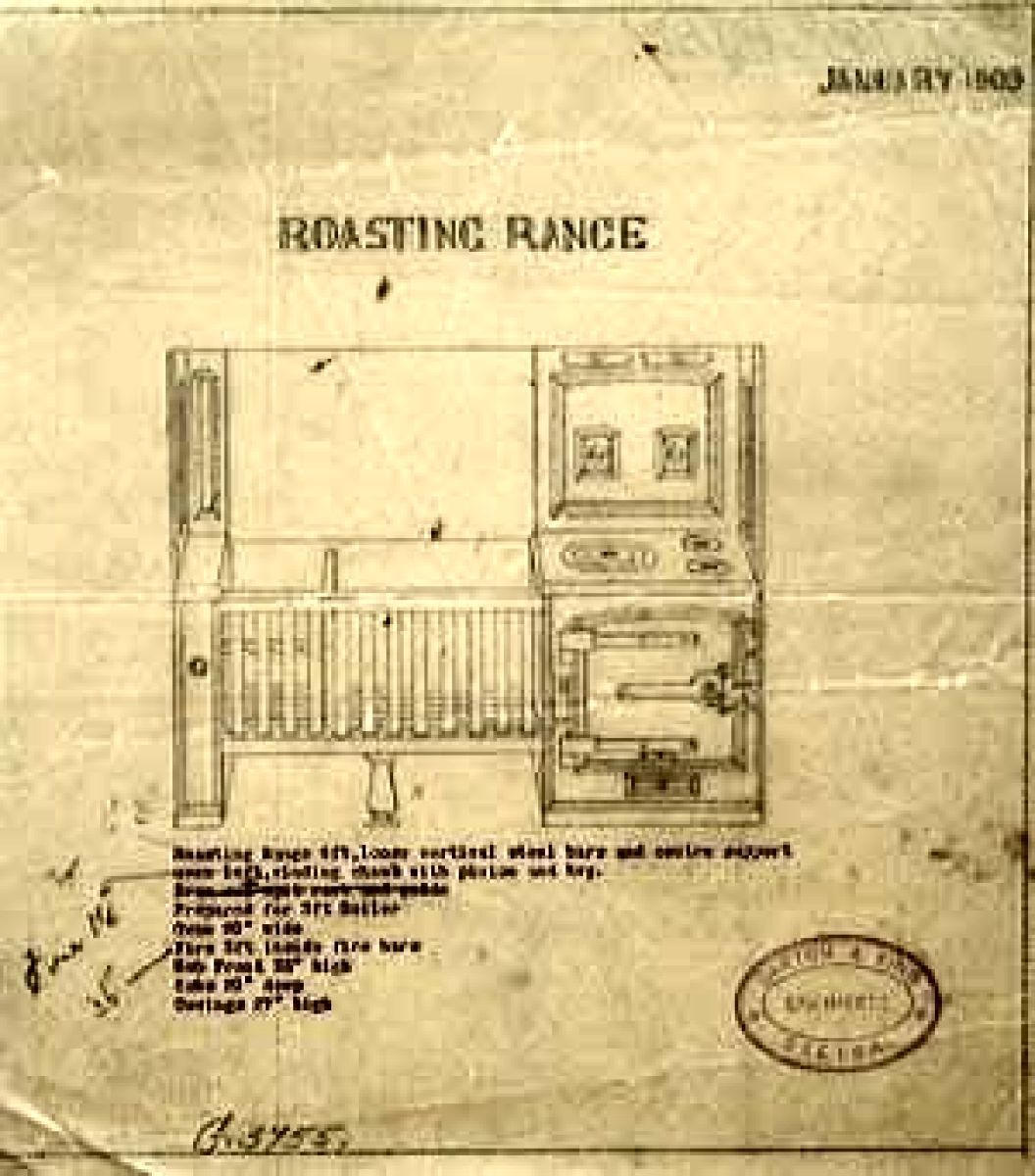 Quite when this 6 foot wide range was introduced is uncertain. It certainly does not appear in the 1900 Catalogue of Cooking Stoves but the style is similar to other earlier versions.
The Large Range
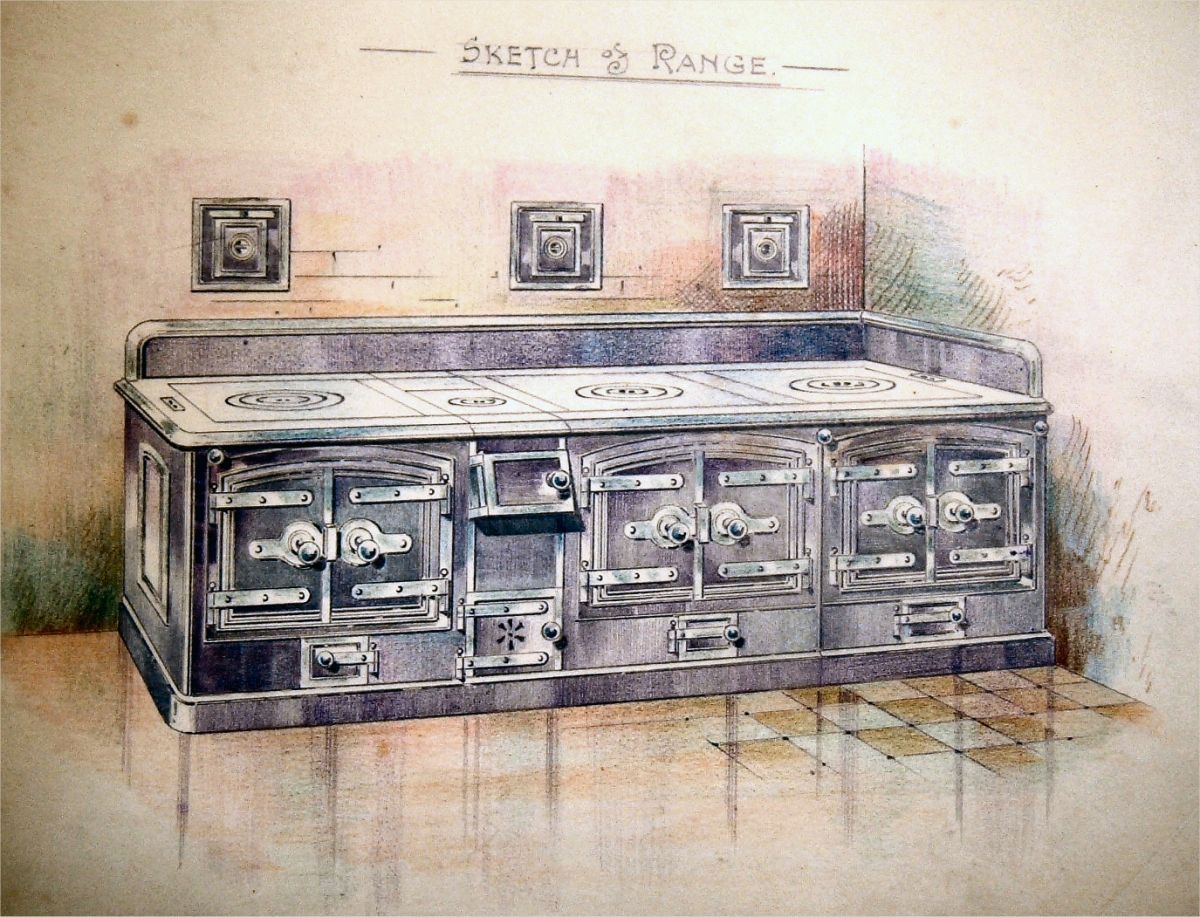 This artists impression of a large range is shown for its artistic quality as a drawing more than anything else. Similar sketches abound in the Archives and this specimen is a particularly attractive example.
Full Sized Range
Two Albumen Photographs of a Full Sized Range and a photo of a slightly different model. There are no clues to the Model Name or Date of Manufacture but you can be assured that the purchaser would be unable to forget the makers name as it is cast into the ironwork and is particularly prominent at the rear of the range.
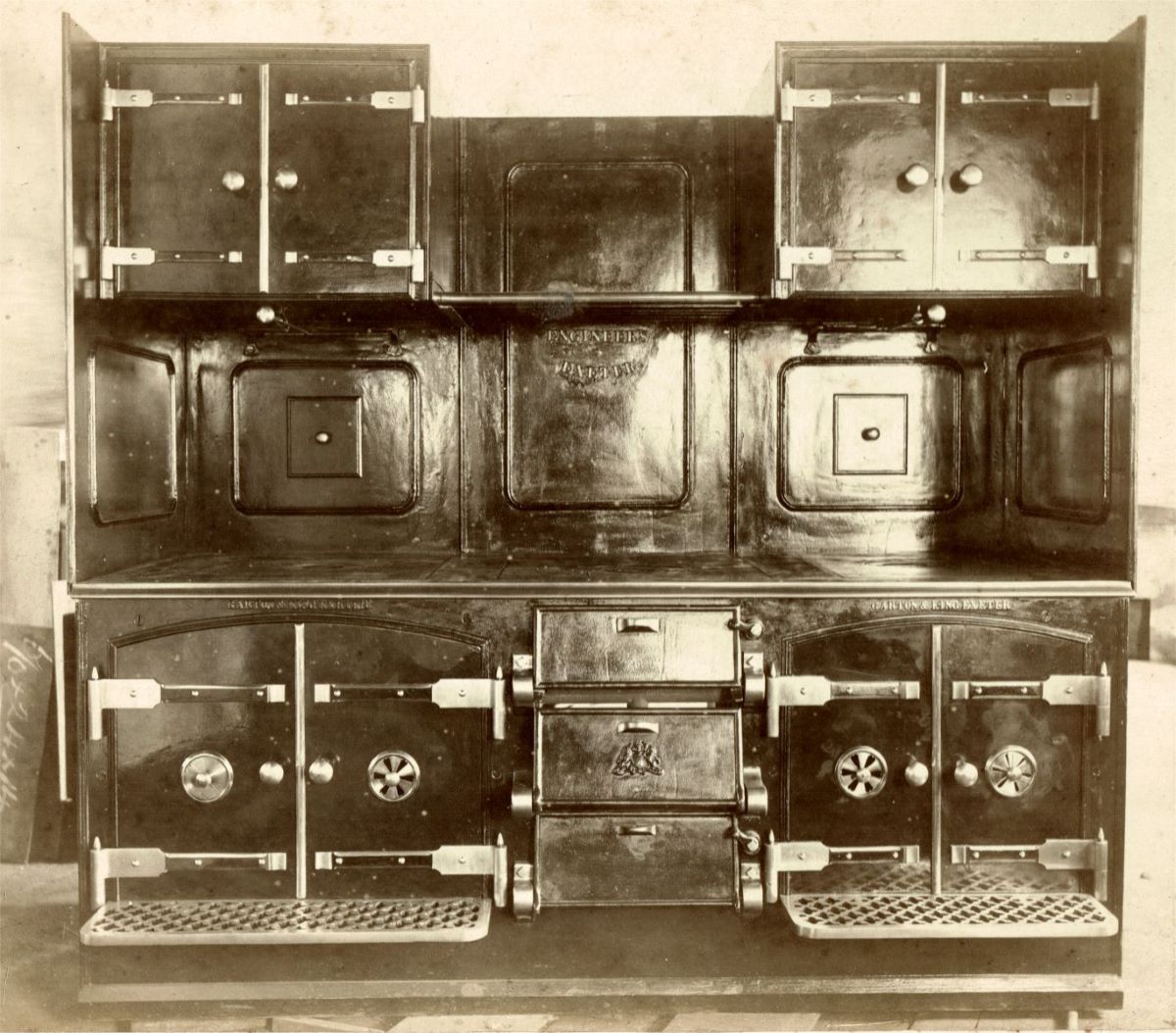
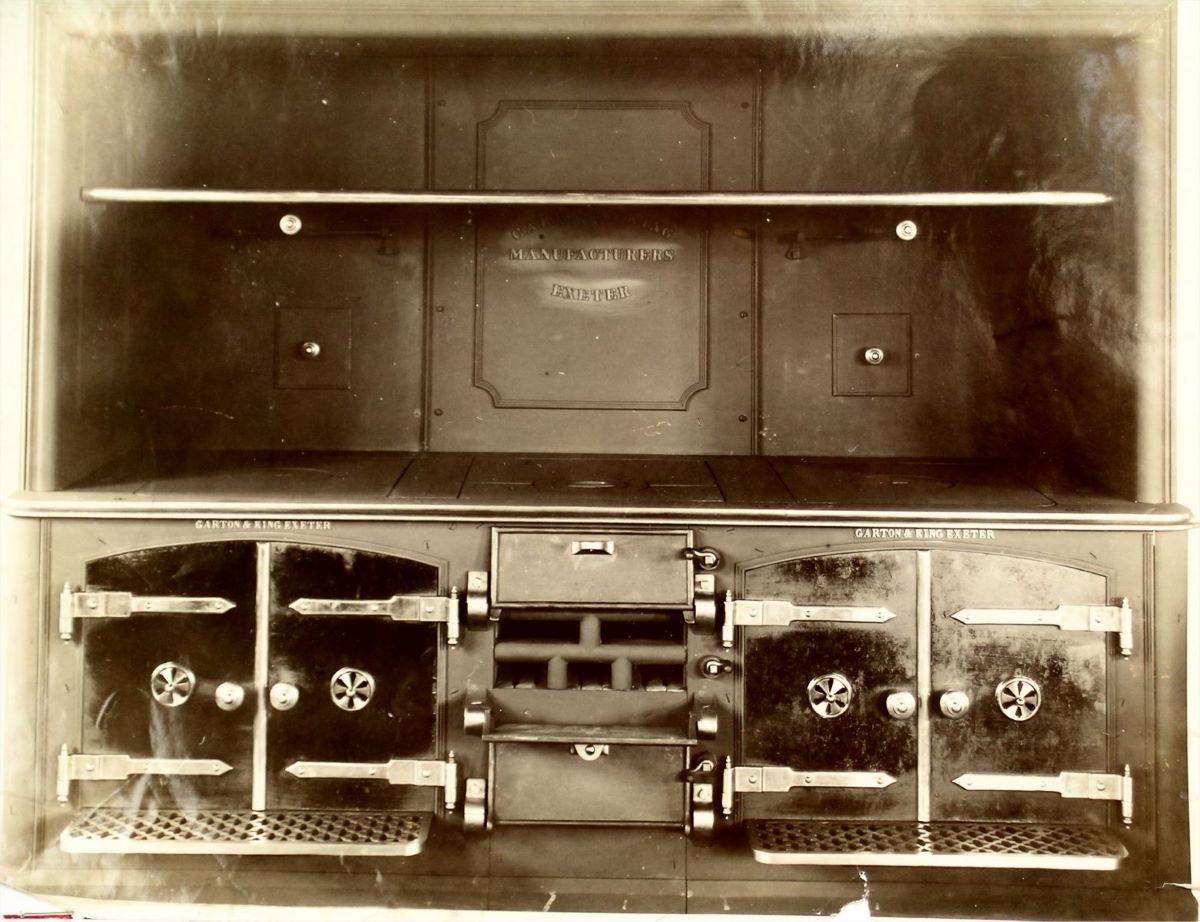
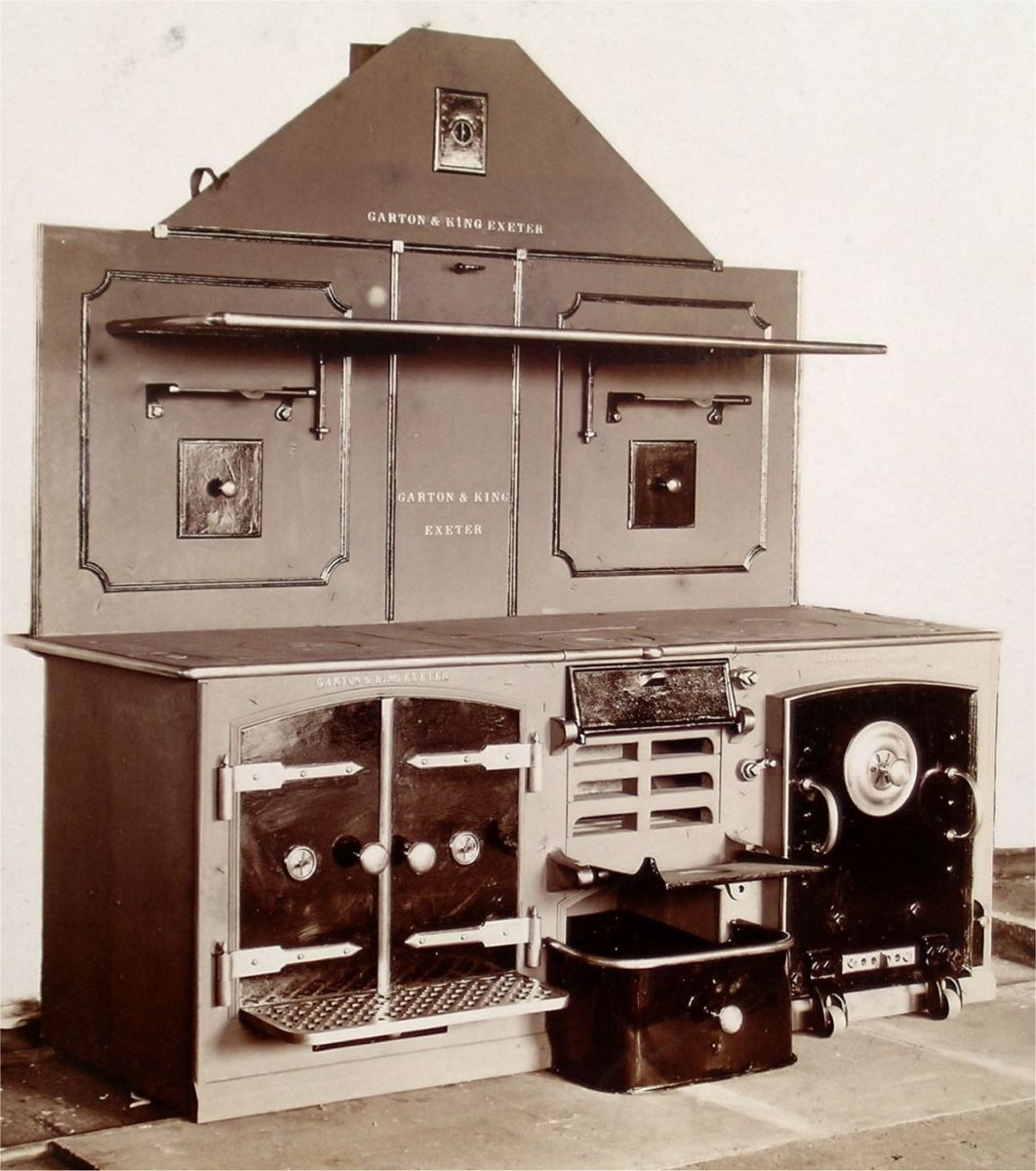
Devon Club and Hotel Range
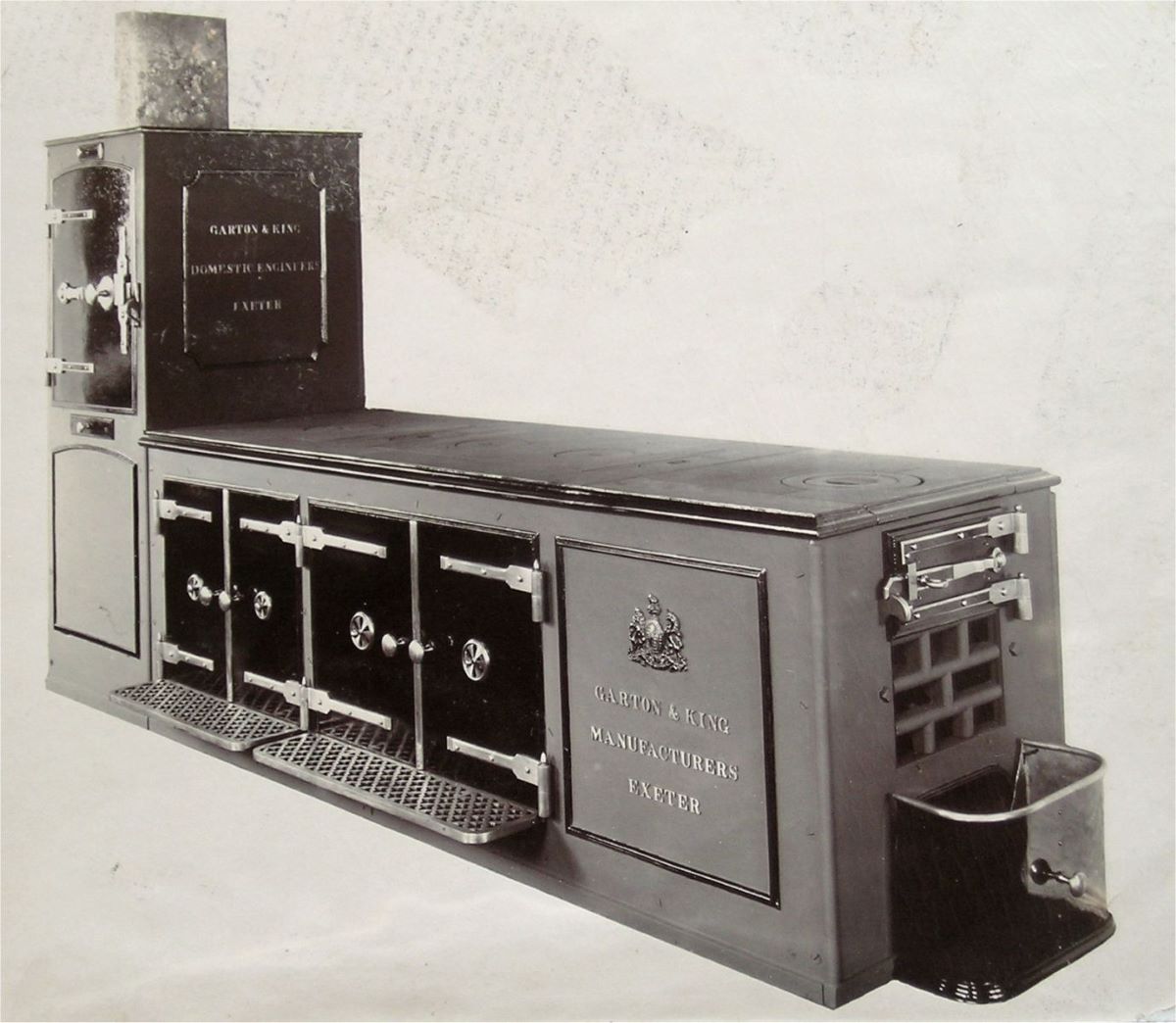 This Albumen Photograph is of a model from the Devon Club and Hotel Range. Some models incorporated a Boiler “prepared for any pressure of water when required, with power sufficient to provide, in connection with a system of circulation, a practically unlimited supply of hot water.
The fire is placed at the furthest end from the wall – the appliance stands out into the kitchen with the upright Hot Closet fixed in the usual recess of a firplace opening. Models are in the region of 7’ 6” long and around 2’ 6” wide. There are several flues involved in the construction and a check – draught immediately under the hot plate allows the option of Hot Plate Cooking or Roasting & Baking in the Ovens by its diversion of the direction of the heat.
The Boiler-Equipped Devon Club and Hotel Range
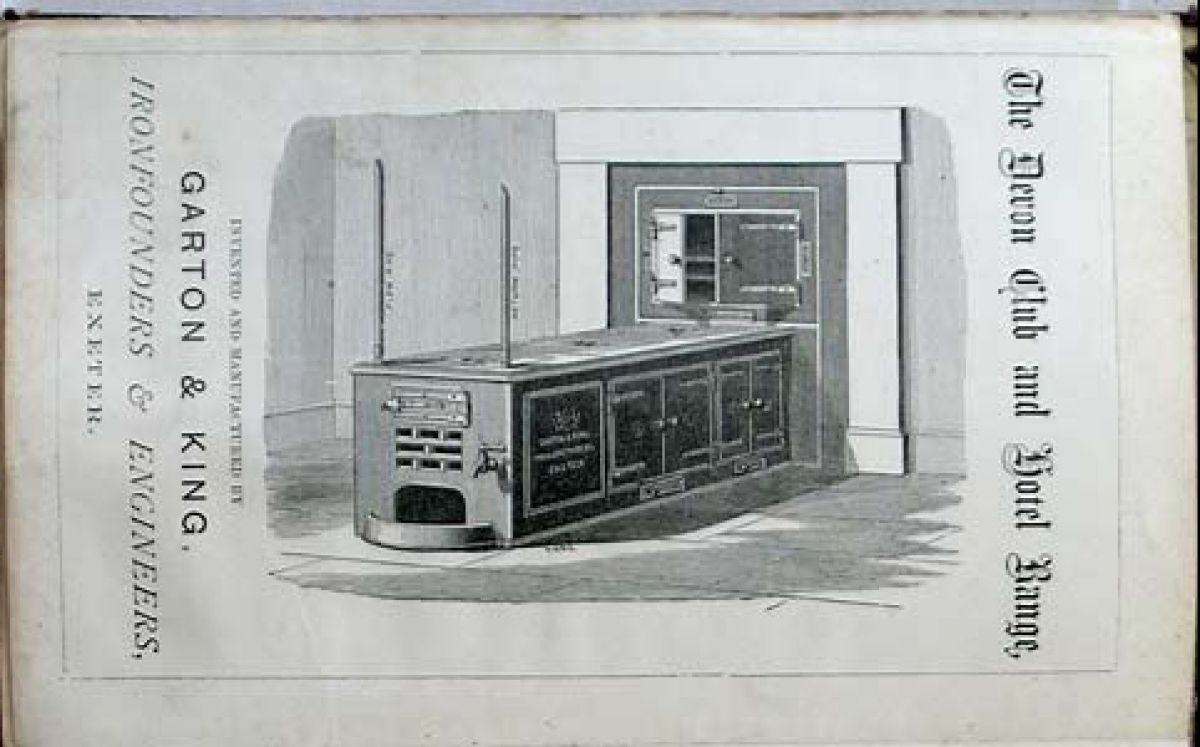 Immediately above the fire at the outward end of the range you can see the flow and return pipes for the boiler option on this series of ranges.
Examples from a Catalogue
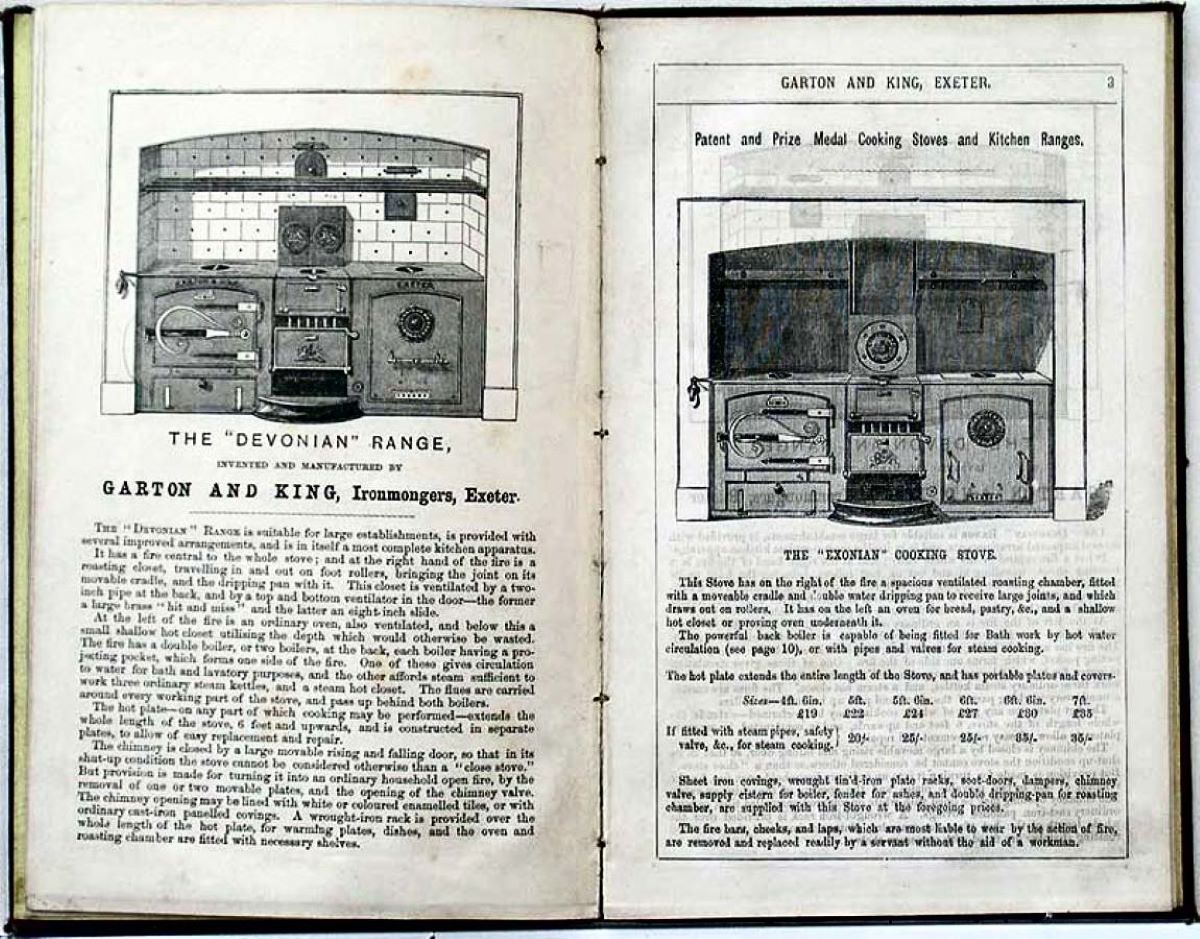 On the left page we have The Devonian. Invented and manufactured by Garton & King this range is suitable for large establishments and incorporates several improvements on previous models which makes it a most complete kitchen apparatus. You should be able to enlarge this picture to read the detailed description. The model on the right is the Exonian Cooking Stove (with the added bonus of a powerful Back Boiler and provision for steam cooking).
Combination Cooker Drawing, March 1895
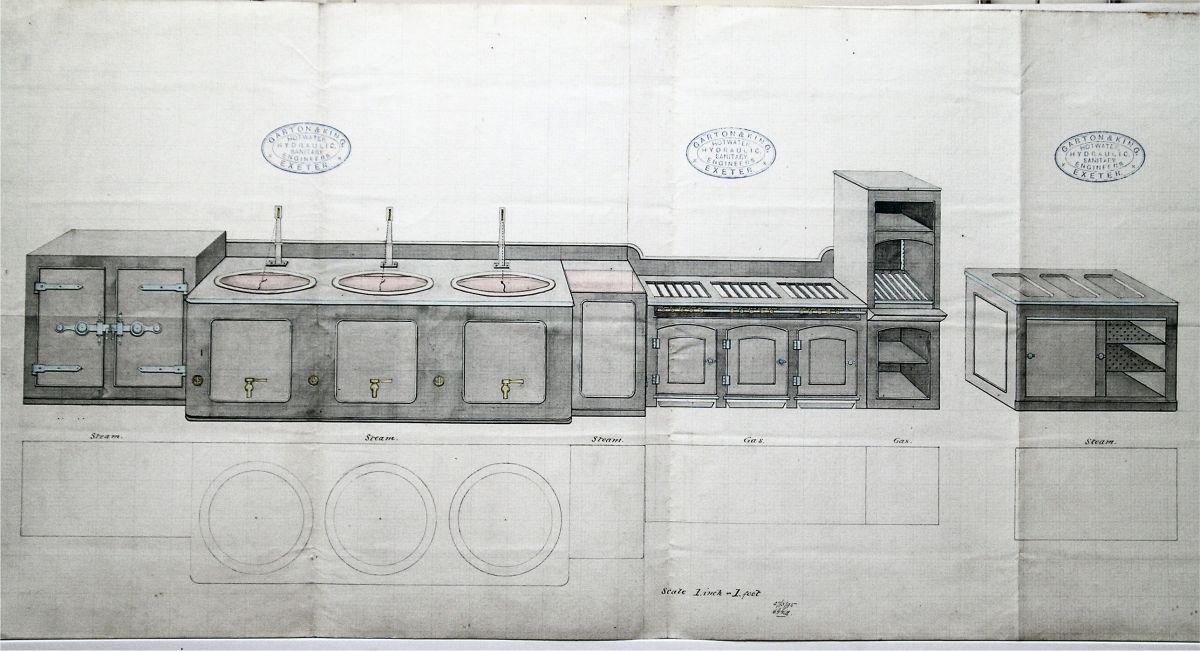 Drawing of a combination Steamer and (Gas) Cooker. The steamer compartments being on the left hand side of the Drawing.
Another page from the Garton & King Catalogue
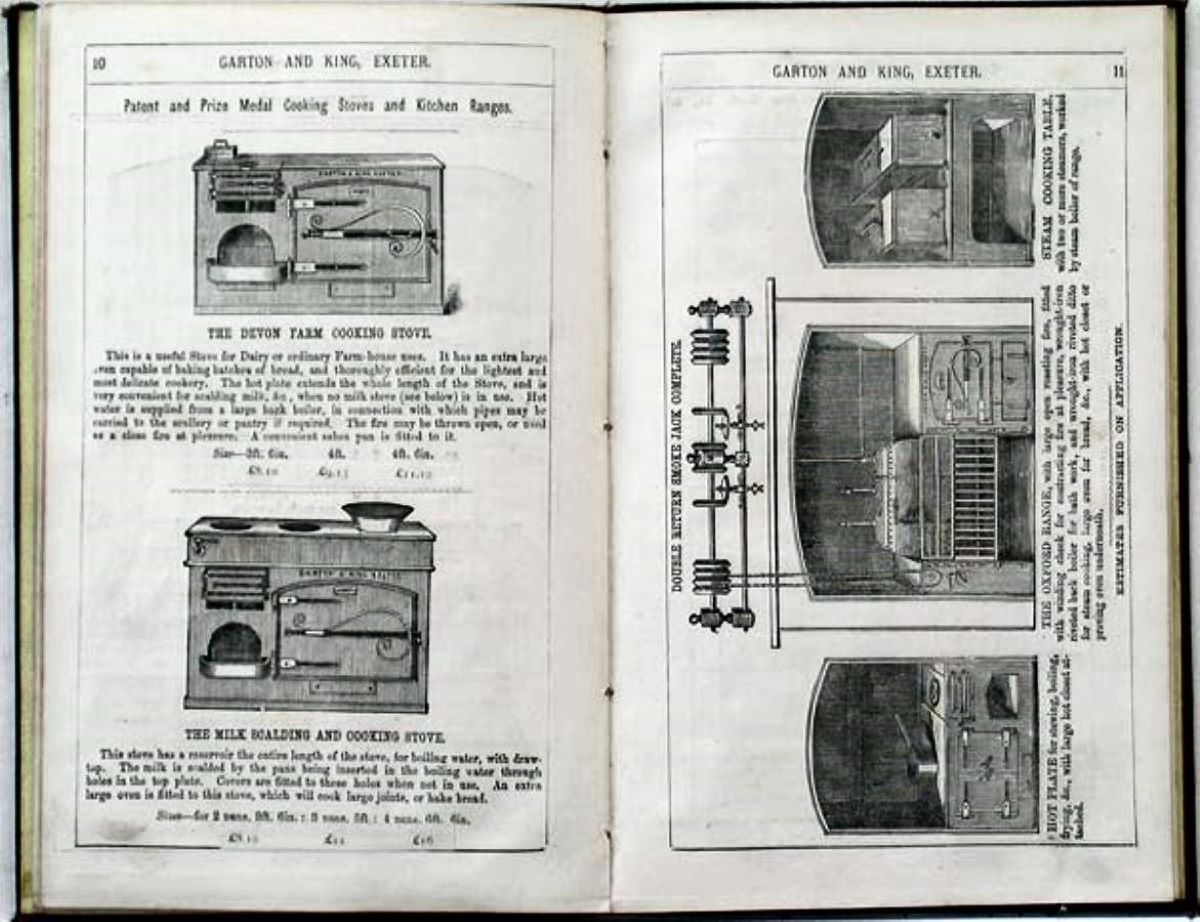 Here we have examples of a Devon Farm Cooking Stove, a combined Stove and Milk Scalder: the oven enabling the cooking of large joints or the baking of Bread. The Oxford Range requires far more space than most – it seems to be an early model and possibly not a particularly fast selling model as later versions seem to incorporate the right hand Steam Cooking facility and the left hand Hotplate in one.
The Exminster Range
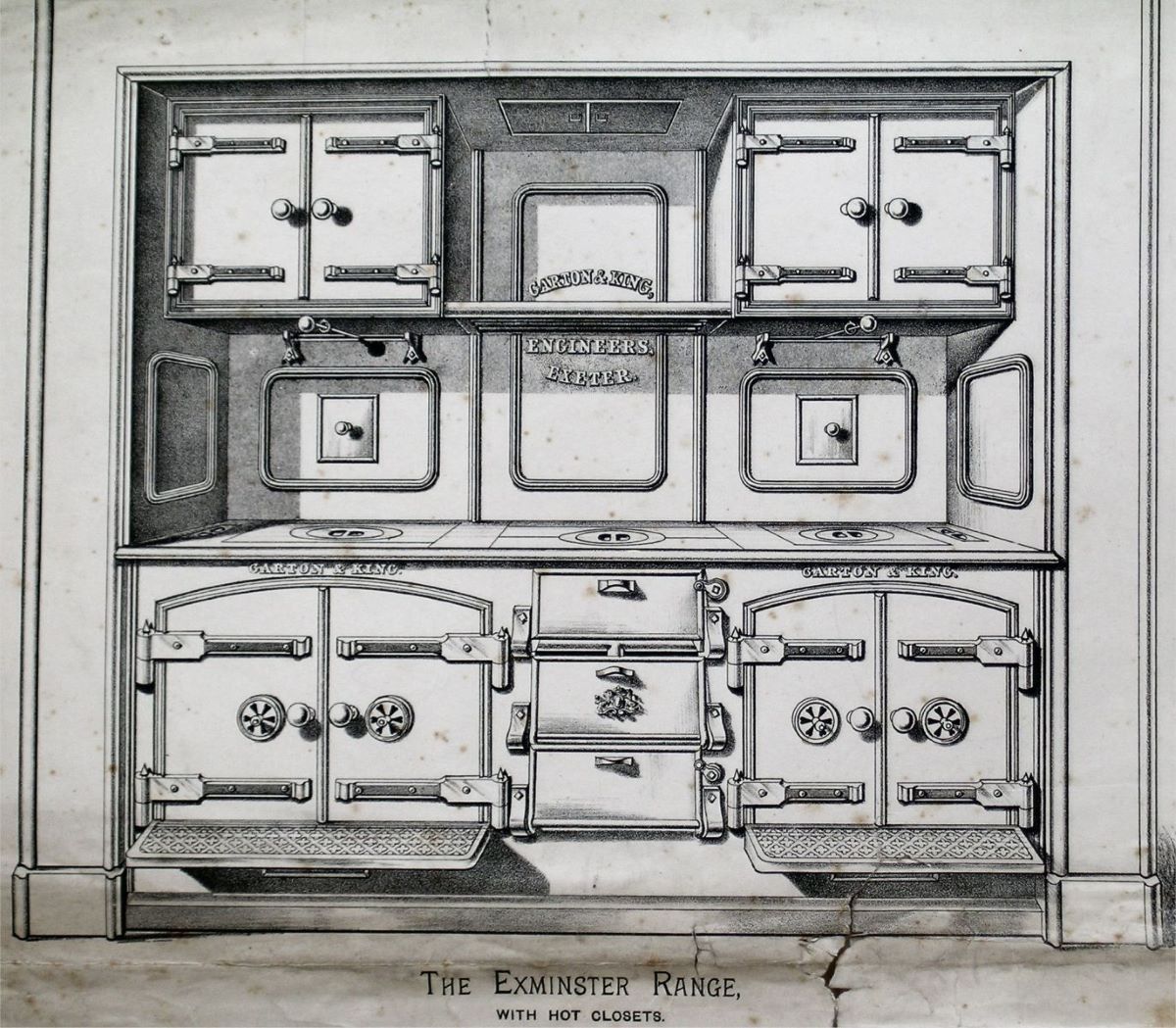 A pen and ink lithograph. The top left and top right compartments are Warming Ovens. Once again the G & K name is a prominent reminder of the manufacturer.
Cooking Range Sketch
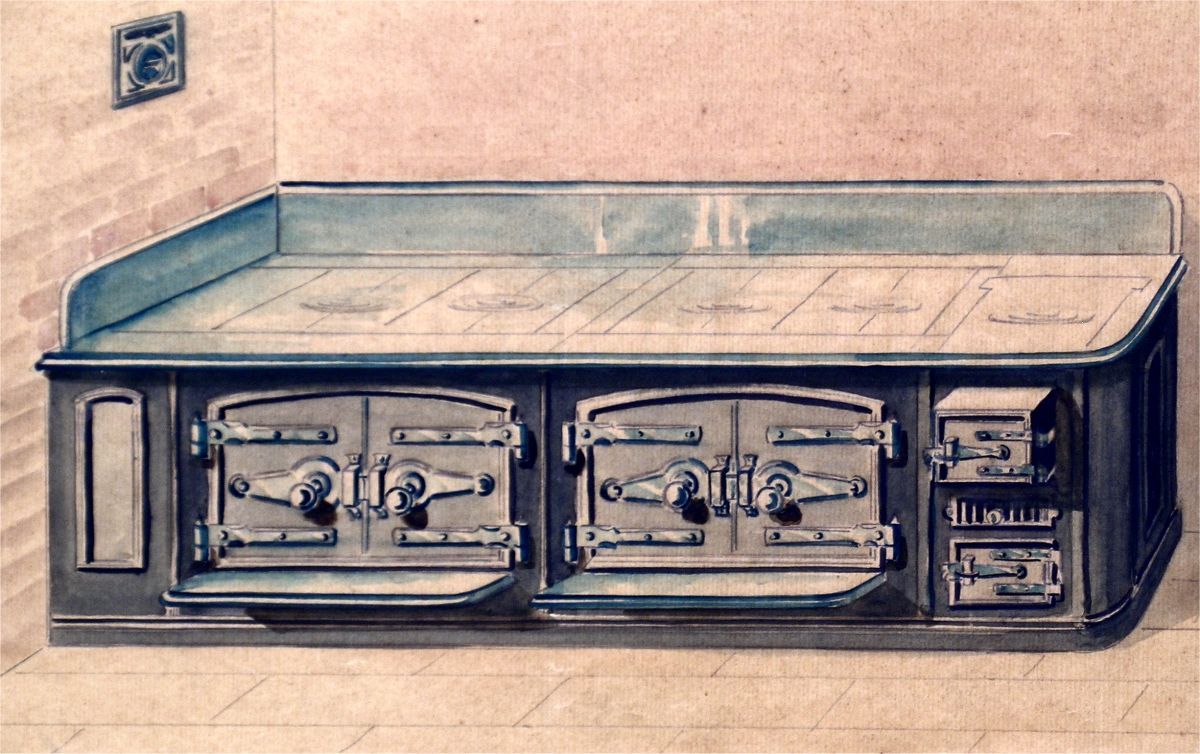 To draw these sketches must have been particularly time consuming – most of the catalogues I have seen are in monochrome so I am uncertain as to the idea behind the hand tinting of the drawing.
Corwyn House Bread Oven
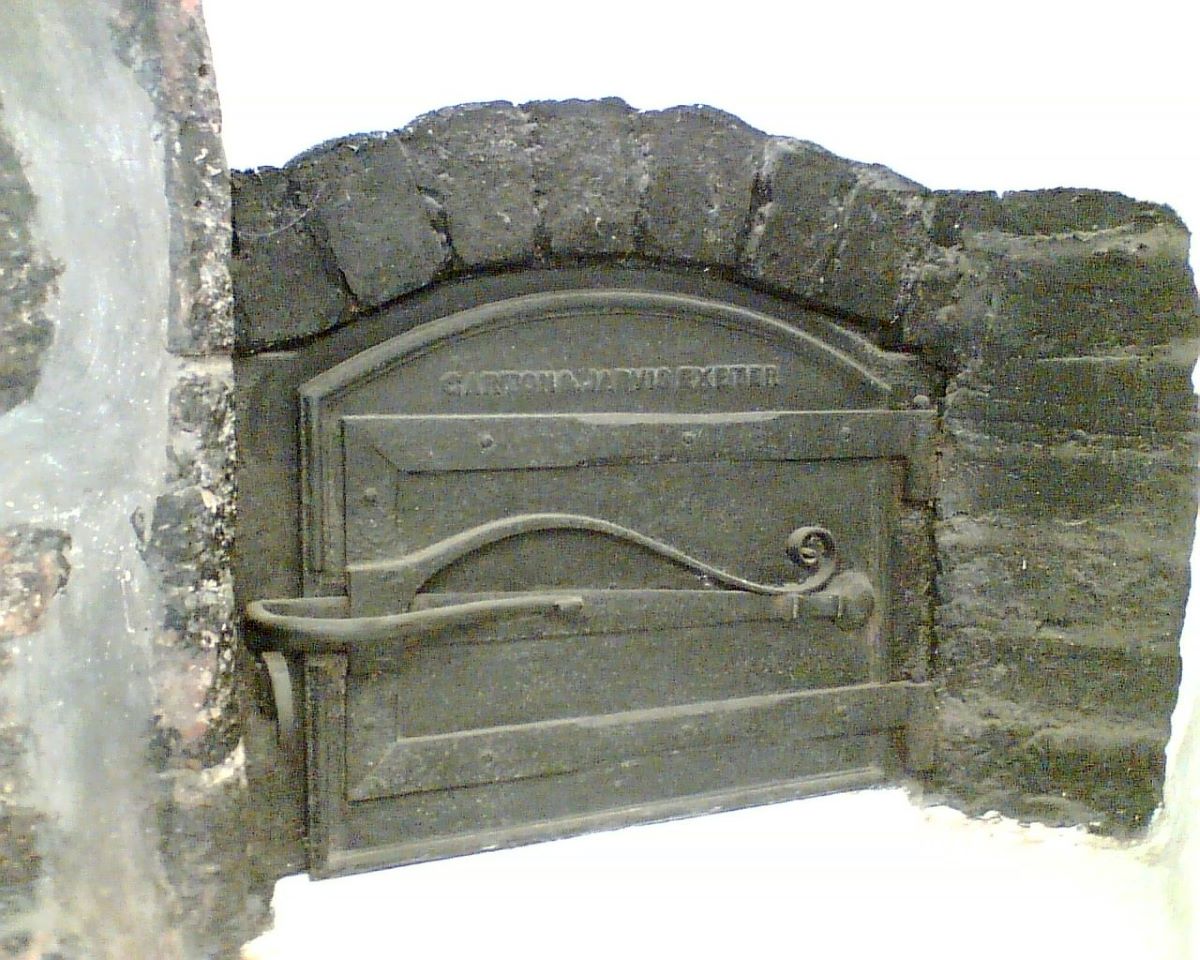 The owner allowed me to photograph this Bread Oven fitted still in the kitchen (next to a large Aga) of this house at Cheriton Bishop. Many bread ovens never showed the manufacturer’s name – thankfully this one does.
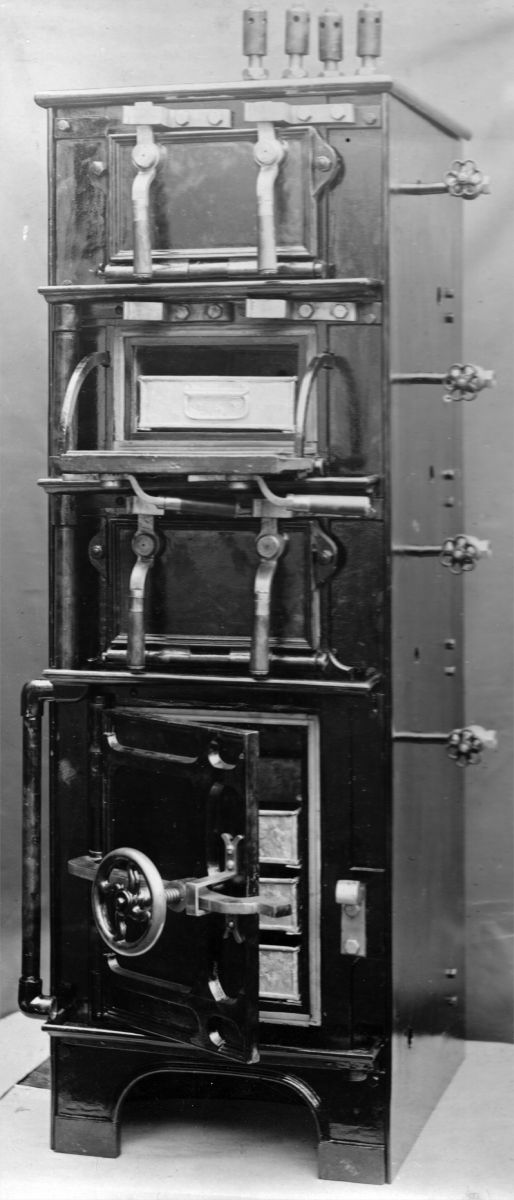
Stack of four steam ovens
A commercial space-saving option for Hotels & Institutions
See also:
Stove Sales — Stove Customers
Heating Equipment — AGA — The Dunbar
Tale of Two Barques — Great Exhibition
Sitemap / Contents